


Compare the best AI chatbot assistants and dedicated customer service platforms for 2026. Learn how they help teams work faster while maintaining quality.
Support teams today have two ways to bring AI into their work: general-purpose AI assistants like ChatGPT and Claude that help with individual tasks, or dedicated customer service platforms like Front that integrate AI directly into team workflows. The right choice depends on your operational complexity.
Advances in AI have created powerful new tools for customer support. But with dozens of AI platforms promising faster, smarter support, how do you separate the wheat from the chaff?
This guide covers both approaches. We’ll look at the best AI chatbots that support teams can use for drafting replies, brainstorming, and research — alongside Front, a complete, AI-native customer operations platform built specifically for teams managing complex, multi-channel support.
How AI chat is reshaping customer experiences
The best AI chatbots go beyond just sending automated replies. Here’s what sets the top platforms apart:
They understand context and intent: Beyond just analyzing keywords in text, today’s AI chatbots can pick up on tone, context, and intent, helping you prioritize what matters most to your customers.
They work in tandem with your team: Rather than replacing the human aspect of customer support, the right AI chat platforms work together with your team. By suggesting responses and summarizing interactions, they free up team members to focus on high-value, human-centered work.
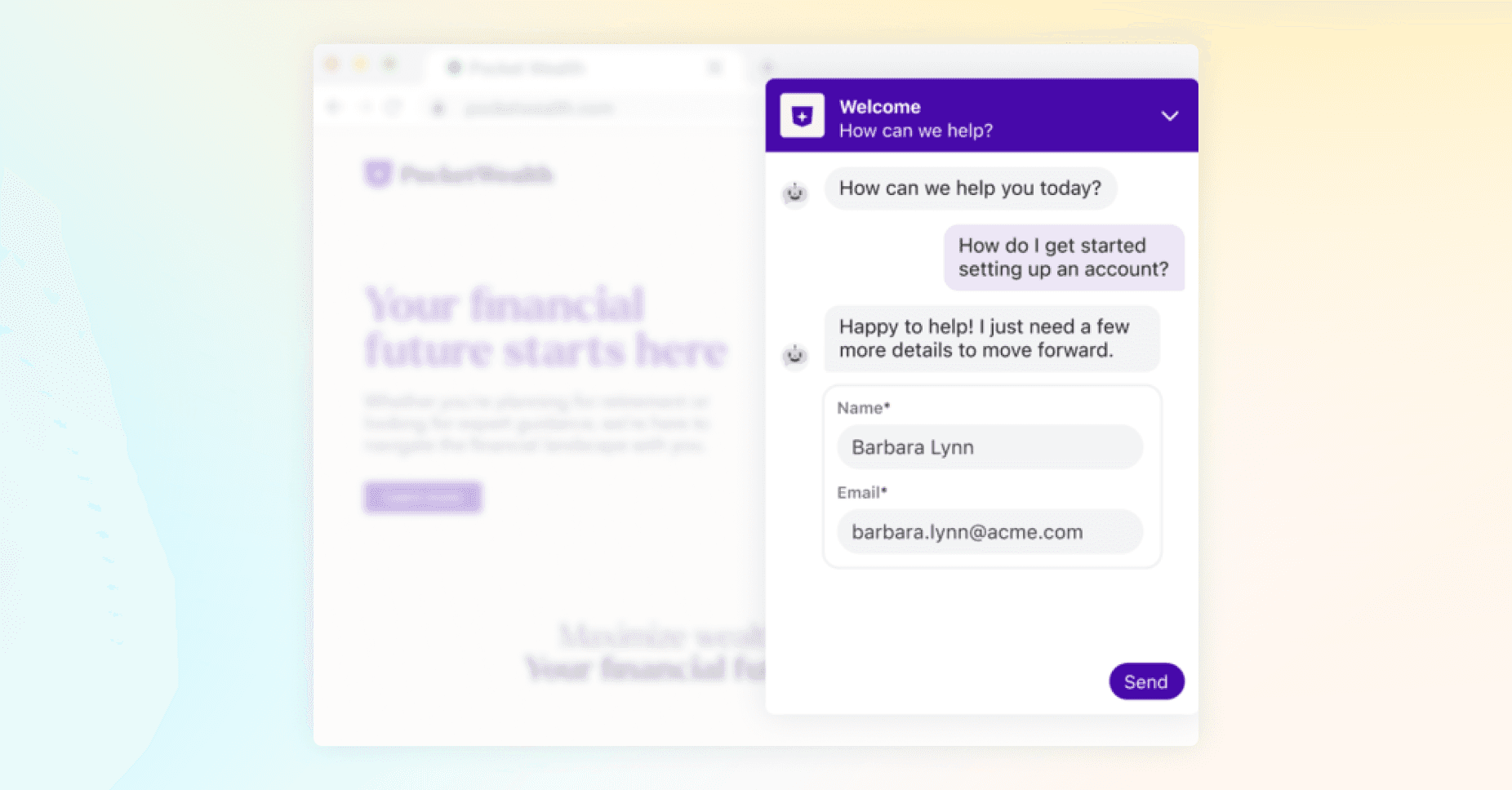
They integrate with your workflows: Whether AI is useful depends on how it fits into your actual operations. The best AI chatbot platforms integrate directly into your support channels, maintaining context, coordinating handoffs, and keeping teams aligned rather than operating as standalone tools where your team manually moves information in and out.
They enhance efficiency: AI chat software can handle repetitive tasks, freeing up your team to work on what matters. And by utilizing its surfaced insights, your team can deliver faster, smarter, and more empathetic service.
Two approaches to AI in customer support
While every business uses AI in a slightly different way to suit their specific circumstances, customer support AI use cases generally fall into two main categories.
General-purpose AI assistants
Tools like ChatGPT, Claude, Microsoft Copilot, and Google Gemini — including productivity-focused extensions like Claude Cowork and Copilot in Microsoft 365 — excel at individual tasks. Team members use them to draft replies, summarize threads, or think through complex problems.
But these tools operate outside your support infrastructure, and the gap shows up fast. More than 70% of B2B companies hit significant AI problems in the past three months — not broken automations, but coordination failures: AI generating extra work instead of reducing it, dropping context at handoff points, and routing requests to the wrong team. That’s what happens when AI operates without a shared view of the operation.
Dedicated AI platforms
Platforms like Front integrate AI directly into customer service workflows. They maintain conversation context automatically, route inquiries across channels, coordinate team handoffs, and ensure quality at scale. These platforms are purpose-built for the operational complexity of B2B support.
The key question: Are you looking for tools that help your team work faster on individual tasks, or a system that orchestrates your entire customer operations?
Note: Throughout this guide, we’ll indicate whether each option is a general-purpose AI assistant (designed for individual tasks across many use cases) or a dedicated customer service platform (built specifically for managing customer operations at scale). This distinction matters because they solve different problems.
The 6 best AI chatbot platforms for 2026
Every AI chatbot has different features and use cases, so no single platform will suit every organization’s needs. Finding the right pick will come down to exploring which option best fits your specific business objectives. Here’s a look at what makes each solution unique.
1. Front AI
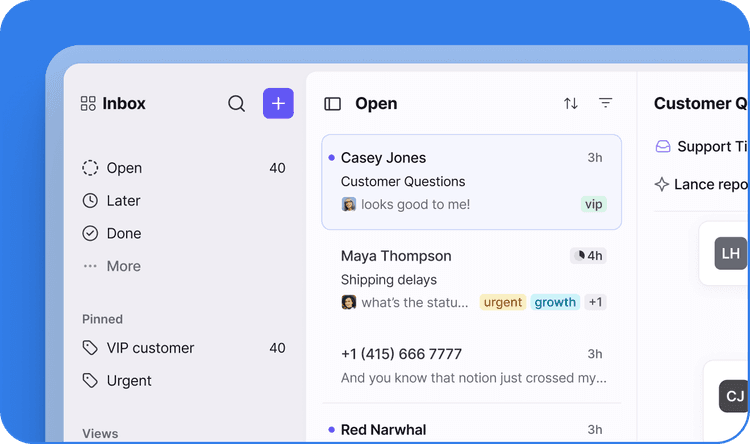
Front is the customer operations platform built for B2B complexity, keeping every team, tool, and customer conversation in sync. Unlike general-purpose AI assistants that operate outside your workflows, Front integrates AI directly into your support infrastructure — maintaining context across channels, coordinating team handoffs, and automating routine work while keeping humans in control of complex issues.
Why Front AI stands out:
Platform vs. tool: While AI assistants like ChatGPT help with individual tasks, Front orchestrates your entire customer operations. Autopilot handles routine inquiries automatically across email, chat, and SMS, while Copilot assists your team with complex conversations — all within a unified workspace where teams collaborate in real time.
Built for B2B operational complexity: Front keeps customer context, conversation history, and team collaboration in one place. When a logistics company coordinates dispatch changes across drivers, customers, and warehouses, or a financial services firm manages compliance inquiries spanning legal and operations, Front ensures nothing gets lost in handoffs.
Control and confidence: You decide which inquiries AI handles autonomously and which get routed to specific team members. Smart QA reviews 100% of conversations for quality, and Smart CSAT tracks satisfaction without survey fatigue. The platform scales automation strategically while preserving the consistency and excellence of your customer experience.
2. ChatGPT
ChatGPT, from OpenAI, was one of the first widely used AI chat platforms. It’s fast, flexible, and great at turning a blank page into a solid starting point. Powered by advanced LLMs, ChatGPT can generate text, answer questions, help with coding, and break down complex ideas in seconds.
For support teams, ChatGPT shines as a general-purpose assistant and is useful for one-off tasks. Since ChatGPT operates outside your support infrastructure, team members manually copy customer context into conversations, review suggestions, and paste responses back. This works well for one-off drafting help, but doesn’t integrate with your conversation history or team workflows.
Why ChatGPT stands out:
Everyday AI chat: Ideal for drafting replies, summarizing information, and brainstorming ideas.
Quick, easy answers: Provides easily understandable explanations of even complex concepts, helping teams think through problems.
Creative and technical tasks: Beyond just text, ChatGPT offers basic image generation in some versions.
3. Google Gemini
Google Gemini is ideal for teams that rely heavily on Google tools and that need to keep up with fast-moving information. The platform is designed around advanced reasoning models, making it great at understanding complex questions and pulling together clear, helpful answers.
Gemini excels at research and information synthesis, making it useful when your team needs to quickly understand complex topics or pull together documentation. However, it’s designed as a general-purpose assistant rather than a customer service tool, so it won’t maintain your support context or integrate with your ticketing workflows.
Why Google Gemini stands out:
Research-heavy work: Great at summarizing documents, answering detailed queries, and connecting ideas.
Real-time insights: Useful when teams need fresh, up-to-date information.
Google Workspace integration: Works directly inside Google’s suite of tools, like Docs, Sheets, and Gmail.
4. Perplexity
Perplexity prioritizes finding clear, trustworthy answers. Instead of long back-and-forth conversations, it focuses on fast, well-sourced responses that help users get to the point quickly. Perplexity specializes in research and fact-finding, not customer service workflows. It’s excellent when team members need to verify information or understand a technical topic quickly, but it won’t help with conversation management, team coordination, or maintaining customer context.
Why Perplexity stands out:
Research and discovery: Answers questions with verifiable sources.
Quick summaries: Breaks down complex topics into concise insights.
Decision support: Ideal when accuracy matters more than creativity.
5. Claude
Anthropic designed Claude around safety and alignment, making it ideal for teams that handle sensitive or high-stakes conversations. It focuses on understanding intent and generating thoughtful, on-brand responses.
Claude works well for thoughtful, one-off assistance, helping your team draft sensitive communications or think through complex customer situations. Like the other AI bots in this list, it operates separately from your support systems, so team members interact with it for individual tasks rather than using it as an integrated workflow tool.
Why Claude stands out:
Secure and careful AI chat: Great at handling sensitive topics while minimizing risk.
Summarization and reasoning: Quickly digests long conversations or information in documents.
Team collaboration: Can be integrated into workflows to assist with internal research or support tasks.
6. Microsoft Copilot
Microsoft Copilot is an AI agent that works directly within Microsoft 365’s suite of apps. It helps teams draft emails, summarize threads, and generate insights across Word, Excel, Outlook, and Teams.
While Copilot isn’t a standalone chatbot-as-a-service offering, it can support multi-channel workflows when used within Microsoft Dynamics 365. For teams already operating in the Microsoft ecosystem, this integration provides tighter workflow coordination than standalone AI assistants, though it’s still designed primarily for internal productivity rather than customer-facing operations.
Why Microsoft Copilot stands out:
Workflow productivity: Drafts content, summarizes conversations, and generates reports inside apps most businesses are familiar with.
Data and knowledge support: Interprets spreadsheets, documents, and internal information quickly.
Embedded support assistance: Can assist support teams when used in Microsoft Dynamics 365, helping with ticket summaries, knowledge suggestions, and workflow automation.
Choose the right approach: AI assistant or AI platform?
The best choice isn’t about features — it’s about your operational reality.
Choose general-purpose AI assistants (like ChatGPT, Claude, or Gemini) when:
Your team needs help drafting individual replies or summarizing information
Your support focuses primarily on individual customer interactions rather than multi-party coordination
You’re running a simple support model without complex handoffs
Cost is a primary concern
Choose a dedicated AI platform (like Front) when:
You’re managing multi-channel, multi-stakeholder customer operations
Support involves coordination across teams, departments, or external partners
Consistency and quality must scale without losing the human touch
You need AI that understands your full customer context, not just the last message
Your operations involve complex workflows where one missed detail creates chaos
For B2B teams handling operational complexity such as dispatch coordination, compliance inquiries, supply chain issues, or client services, a purpose-built platform like Front delivers the orchestration, context, and control that general AI assistants can’t provide.
Don’t just draft replies — orchestrate your operations with Front AI
General-purpose AI assistants like ChatGPT and Claude help support teams work faster on individual tasks. But for B2B teams managing operational complexity, where customer conversations span multiple channels, involve cross-functional coordination, and demand consistent quality at scale, you need more than an AI assistant — you need an AI-powered operations platform.
Front is built to handle the coordination and context behind complex B2B customer relationships. The platform connects every channel, workflow, and team member so your customer operations move with clarity and confidence. Autopilot resolves routine interactions automatically, and Copilot helps your team navigate the unpredictable. Together, they make customer operations a strategic advantage rather than a cost center.
Ready to move beyond AI assistants and use an operations platform that scales with your team? Request a demo of Front AI today.
FAQs
What is the best AI chatbot?
There is no single best AI chatbot. General-purpose assistants like ChatGPT and Claude excel at helping individual team members draft replies and think through problems. For B2B teams managing complex operations across multiple channels and stakeholders, AI-powered platforms like Front integrate intelligence directly into workflows, maintaining context and coordinating teams automatically.
Which are the most used AI chatbots?
Some of the most widely used AI chatbots include ChatGPT, Google Gemini, Microsoft Copilot, Claude, and Meta AI. Their popularity stems from the fact that they’re easy to use, built on powerful LLMs, and are versatile enough to handle a range of tasks.
What is a good AI chat app?
AI chat apps should feel natural to use, understand context, and give helpful responses without constant prompting. Apps like ChatGPT or Claude are great for individuals. For teams, especially in customer support, options like Front AI that integrate directly with other tools can often deliver far more value than a standalone chatbot.
Is there a better chatbot than ChatGPT?
ChatGPT is excellent for general tasks, but support teams have different needs depending on their operational complexity. Claude offers more thoughtful responses. Perplexity is strong for research. Gemini works seamlessly with Google Workspace. For B2B teams needing coordinated, multi-channel customer operations rather than individual task assistance, Front provides the orchestration and team collaboration that general AI assistants can’t deliver.