




New data reveals where operational complexity, not transaction volume, drives AI adoption.
Now that the holiday shopping and shipping frenzy has settled and return pallets are stacked high, supply chain teams are taking stock of what the past six weeks have told us about their operations. Our data suggests that the teams that leaned the hardest into AI during peak weeks weren’t the ones everyone was watching.
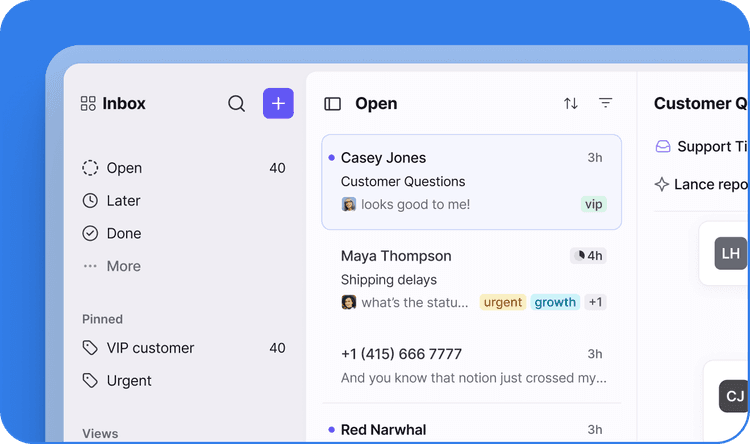
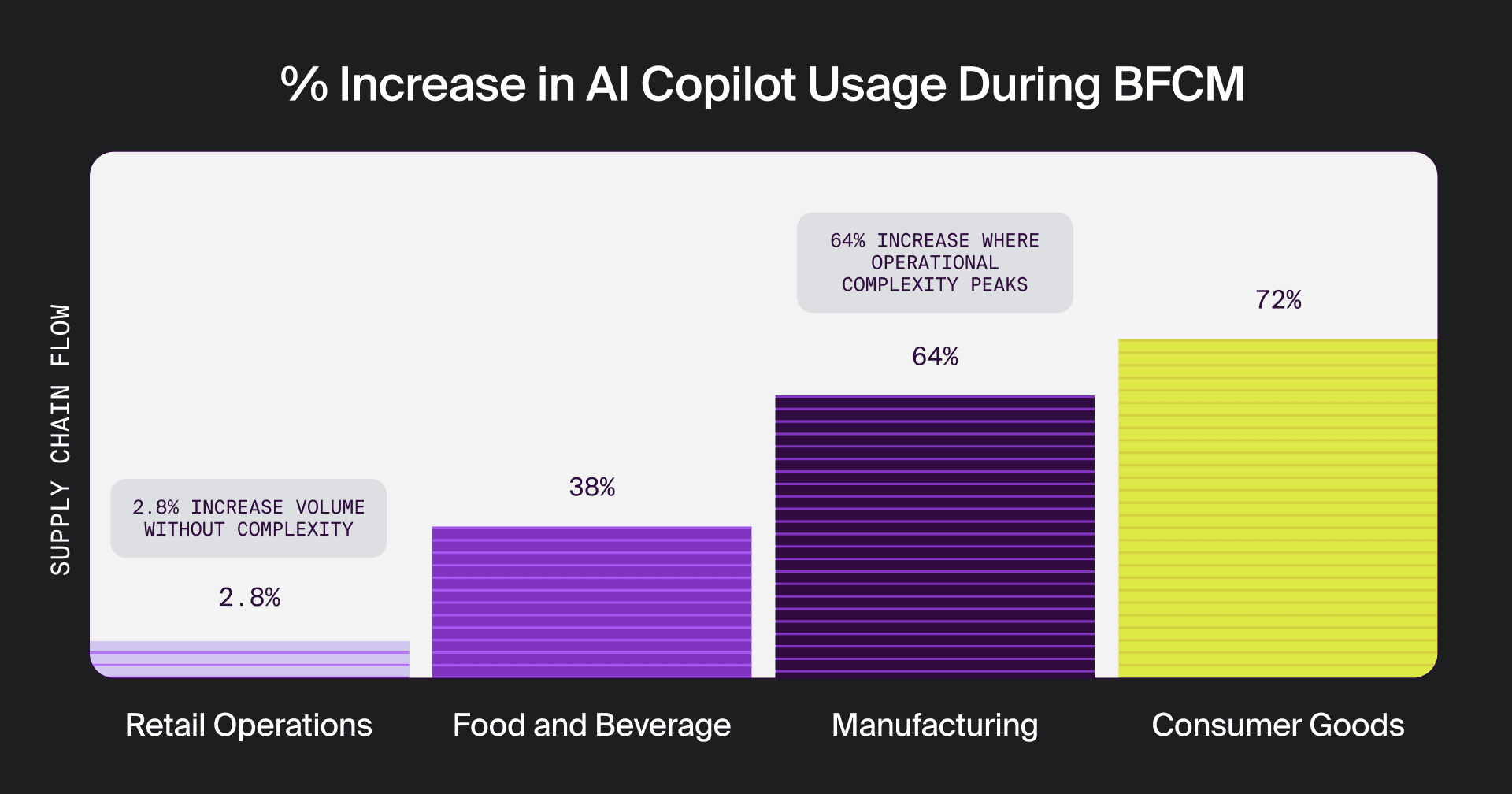
While shoppers clicked "buy now" and retail support teams handled order inquiries, a different operational story was unfolding upstream. Manufacturing teams increased their use of AI-powered support assistance (features that help teams draft replies, surface relevant past conversations, and summarize complex customer inquiries) by 64% during the peak shopping period. Consumer goods companies surged 72%. Food and beverage operations climbed 38%. Meanwhile, the retail operations teams at the end of that supply chain increased AI usage by just 2.8%.
The numbers reveal something counterintuitive: consumer-facing retail saw AI automation through chatbots and instant-answer tools that were already scaled before the holidays. But, the invisible machinery of manufacturing, distribution, and supply chain coordination? That’s where artificial intelligence is quietly becoming the operational backbone.
The Upstream Pressure Cooker
Black Friday stress doesn’t start when customers click purchase. It starts weeks earlier, when manufacturers scramble to fulfill last-minute bulk orders, consumer goods companies manage inventory volatility across distribution networks, and logistics teams field desperate inquiries from downstream retailers about shipment status.
When BFCM hit, these upstream teams didn’t just work harder, they worked smarter. Manufacturing operations can use AI to triage component delays, reschedule production runs, and answer supplier questions about lead times. Consumer goods companies can automate responses to retailer stockout inquiries and inventory allocation disputes. Food and beverage teams are able to manage temperature-sensitive logistics and demand forecasting adjustments in real time. Each of these problems shares a common trait: they’re analytically complex. A single manufacturing delay cascades through dozens of SKUs, multiple retail partners, and hundreds of end consumers. That’s where AI proves its value.
Complexity vs. Volume
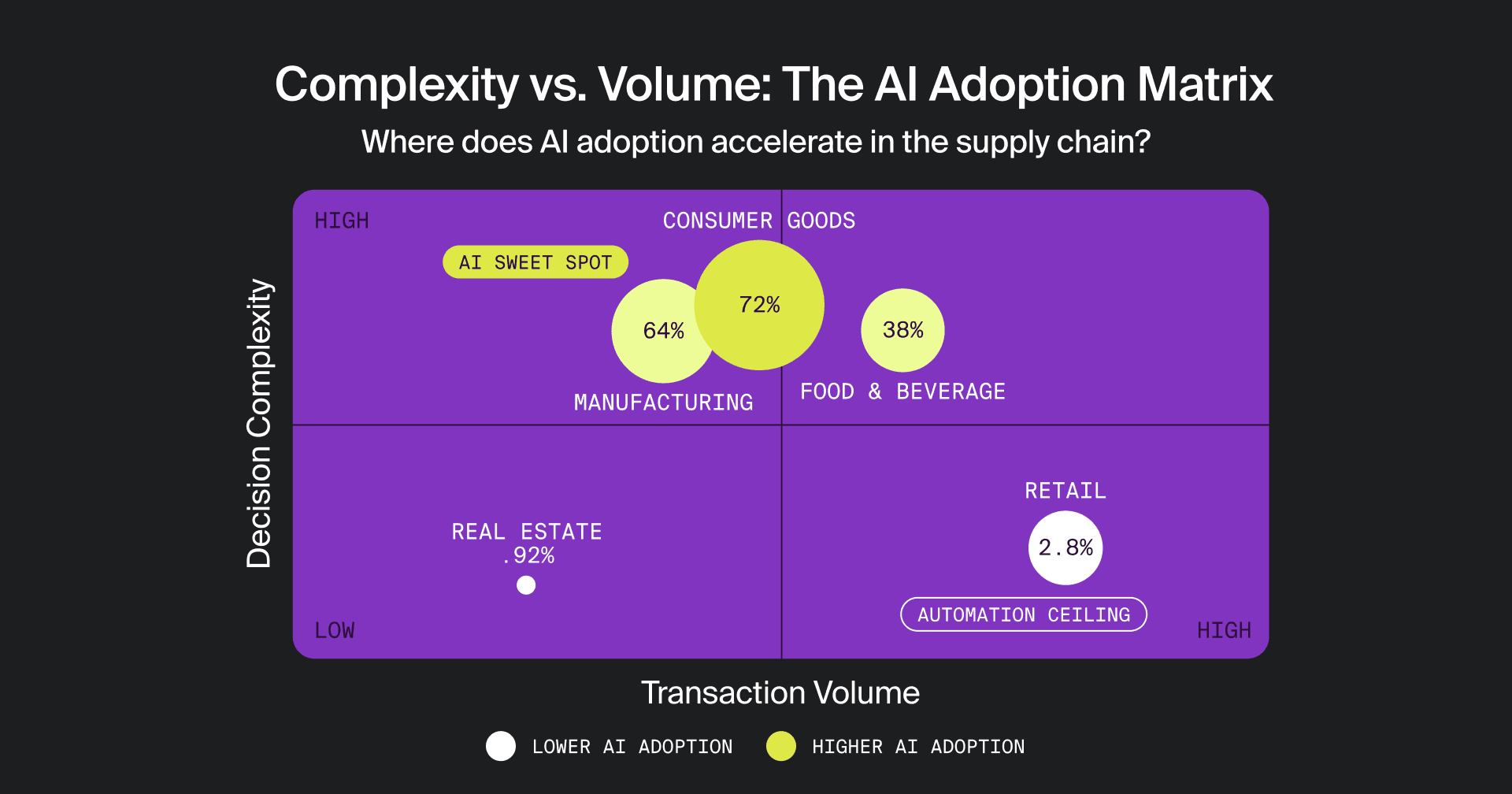
Retail’s 2.8% increase indicates a ceiling. These teams handle enormous transaction volumes, but the questions are relatively predictable: "Where’s my order?" "How do I return this?" "Is this in stock?" Many retail operations had already automated tier-one responses months before the holiday rush. The holiday period didn’t reveal new problems that required new AI capabilities.
Manufacturing’s problems are fundamentally different. When an international supplier experiences a delay, AI Copilot can instantly synthesize: which products are affected, which customers need notification, whether alternative suppliers can fill gaps, and what the cost implications are across the entire production schedule. Manual workflows can’t keep pace with that level of cascading complexity.
One is automation. The other is intelligence.
What January Will Tell Us
The past six weeks offered a real preview of where operational complexity is headed. Global supply chains are not getting simpler. Customer expectations are not easing up. And the margin for error is not growing.
As the return season accelerates, we’ll see which teams are truly ready for operational complexity. Consumer goods companies will manage return inventory allocation. Manufacturing teams will handle warranty claims and refurbishment decisions. The teams that leaned into AI back in November are already more comfortable using it in the flow of work. That early adoption shows up now in faster decisions, fewer mistakes, and more consistent experiences for customers. And those gains don’t disappear when peak season ends.
The broader insight? AI adoption during stress periods reveals which industries face complexity problems versus volume problems. Manufacturing proved it has both and AI is how they’re solving it.
The holiday shopping experience feels effortless to consumers because of invisible decisions happening upstream. Manufacturing’s 64% AI surge during Black Friday shows that supply chain complexity is where artificial intelligence earns its keep. As customer expectations tighten and global supply chains grow more intricate, the companies that master AI-assisted operations during peak periods will define the new operational standard.
The data suggests that the revolution is already underway, just not where everyone was looking.
Methodology: Analysis covers Front Copilot usage during a 28-day period spanning Black Friday through Cyber Monday 2025, compared to a three-month baseline. Data reflects aggregated usage across Front customer accounts grouped by industry vertical.