

Customer Operations Ultimate Guide [2026]
When your company hits a rapid growth phase, front-line support systems usually break. Tickets pile up. Agents burn out fighting clunky software instead of actually helping users. You need a dedicated function to manage the tech stack and fix the internal pipes so the water can flow again.
This seven-chapter guide walks you through exactly how to build a high-performing customer operations engine from the ground up. We break down the true meaning of the role and show you how to structure your team for long-term growth. You will learn how to write standard operating procedures that agents actually read, pick the right software to scale a global workforce, and deploy AI tools to cut down average handle times before tickets even hit a human inbox. If you want to stop fighting daily fires and start running a data-driven support floor, this guide gives you the exact blueprint.
Inside this guide:
- The true definition: How operations differs from traditional customer service and success.
- Team structure: Exactly who to hire, from analysts up to the VP level.
- Process building: How to draft operational plans and SOPs that eliminate agent guesswork.
- Tech stack scaling: The platforms you need to route global tickets and integrate with your CRM.
- AI implementation: How to automate basic requests and categorize issues instantly.
- Performance metrics: The exact data you need to track to justify your headcount.
What is Customer Operations?
Most growing companies hit a breaking point where the front-line agents are working incredibly hard but the internal systems are falling apart. Support tickets pile up, response times slow down, and customer satisfaction and loyalty drop fast. You need someone to fix the pipes so the water can flow again.
Today, customers expect instant answers and high quality resolutions. This exact scenario explains why the customer operations role exists today. When founders ask what is customer operations, they usually want a quick fix for team chaos. In reality, customer operations is the strategic management of the behind-the-scenes systems, data, and processes that allow front-line teams to function properly.
The formal customer operations definition covers everything from routing rules to software administration. The core customer operations meaning centers entirely on removing friction for your agents. Every customer operations team functions as the internal engine of the company. They do not talk to buyers directly, focusing entirely on software and workflows instead.
Managing a healthy customer operations process means your agents spend time solving problems instead of fighting with clunky software. This foundation makes customer support operations sustainable over the long term.
Expanding the Scope of Service Operations
The field has grown into several specialized branches over the last decade. People often search for the customer service operations definition to understand inbound request handling. The true customer service operations meaning relates directly to ticketing workflows, agent scheduling, and updating knowledge bases. What is customer service operations at its core? The logistics involve helping people efficiently.
Proactive retention teams require entirely different support systems. What is customer success operations then? The formal customer success operations definition covers account health scoring, renewal tracking, and onboarding metrics. Some organizations use a broader definition of customer experience operations to track the full buyer journey from start to finish.
All these functions fall under the wide umbrella of customer facing operations. Some companies group them together as customer engagement operations to keep reporting and analytics centralized.
Defining Customer Operations vs. Customer Service
Mixing up these terms causes serious organizational headaches. The customer operations vs customer service debate comes down to focus and audience.
Every single customer interaction matters. The main difference between customer service and operations is exactly who they help. Customer service agents talk directly to the users to handle customer inquiries, while operations staff talk to the agents. Operations and customer service rely heavily on each other to succeed. You cannot deliver great support without a solid backend setup.
Poor customer service and operations alignment means customer service teams lack the tools they need to answer questions quickly and improve customer experience. The same logic applies to retention teams. The conversation around customer success vs operations highlights a similar split. Customer success and operations overlap heavily when you need to automate onboarding emails or track product usage. You need to understand the difference between customer success and customer operations to hire the right people.
Success managers actively save at-risk accounts. Operations managers build the alerts that tell those success managers which accounts actually need saving.
When you look at customer support and operations teams, the divide becomes unmistakably clear. Support operations manages the helpdesk routing rules so agents just click and type. If you compare a customer experience operations manager and a customer operations manager, you often see clear differences. Experience managers review broader market survey data, whereas operations managers focus on managing tools directly.
Structuring Your Customer Operations Team
Finding a customer operations job involves looking through dozens of different titles. Every operations job description changes based on the size and maturity of the company.
At the highest level of leadership, a chief customer operations officer or a vp of customer operations sets the long-term vision. Mid-sized companies typically hire a head of customer operations or a director of customer operations. You might also find specialized department heads. A director of customer service operations handles inbound support strategy, while a director of customer success operations focuses exclusively on retention logic for customer success teams.
Management and Individual Contributors
The management tier handles daily execution. A customer operations manager oversees the tech stack. The standard customer operations manager job description focuses heavily on software administration and data analysis. Candidates often ask about the customer operations manager salary, and this number scales dramatically based on technical certifications and coding ability. Other common management titles include the customer service operations manager, customer support operations manager, and customer success operations manager.
Individual contributors play a major role and do the heavy lifting. You will often see a customer operations specialist or a customer operations analyst building reports in the background. The customer operations specialist job description usually mentions fixing routing bugs and organizing data cleanly. Your company might use titles like customer operations coordinator, customer operations representative, or customer operations associate for these exact same duties.
A customer success operations analyst or specialist manages retention software, such as CRM tools and health dashboards.
Specific team needs create niche roles. Here are a few specialized positions you might see:
- A customer operations lead or customer operations supervisor manages small pods of workers.
- A customer operations trainer builds onboarding materials for new agents.
- Highly technical systems might require a dedicated customer operations engineer.
- Companies needing outside perspective often hire a customer operations consultant or customer operations advisor.
- A customer operations executive might handle high-level vendor contracts for enterprise software tools.
Building an Effective Customer Operations Strategy
You cannot run a team on verbal instructions. You need documented workflows. Strong customer service standard operating procedures keep everyone aligned and moving fast. They streamline processes so your team can focus on the user.
Writing a customer service standard operating procedure prevents agents from guessing how to process a refund or escalate a bug. Every standard operating procedure for customer service needs to be easy to read and update. We strongly recommend using a customer service standard operating procedure template so you do not start from scratch. You can find a basic customer service standard operating procedures template online and customize it for your specific product.
This documentation forms the foundation of your customer service operational plan. Your customer support operating procedure should outline exact steps for handling outages. A well-written customer support operation plan cuts down on internal confusion immediately. You must review your customer support operational plan every quarter to ensure it stays relevant.
Look at customer service operations examples from leading brands. They openly share their customer service operations best practices to help the industry grow. They know that when you manage customer service operations well, retention spikes. Improving customer service operations is a continuous cycle of reviewing metrics and updating rules. Coordinating daily customer service operations takes immense discipline, but it pays off when your team scales without breaking.
Tools and Technologies for Scaling Support Operations
You need the right customer operations platform to execute your strategy. Effective customer operations management requires reliable software that works with your team instead of against it. If you want to streamline customer success operations or streamline customer service operations, you have to audit your entire tech stack to build a truly customer centric foundation.
Leaders spend months researching the best tools for scaling customer support operations. Remote workforces need the best software for scaling customer support operations globally. You should look for platforms for scaling customer operations global teams that offer automatic language translation and time zone routing. The ideal platforms for scaling customer support operations connect directly to your billing system and your central CRM.
The market offers countless customer service operations software options. A dedicated customer service operations platform aggregates customer data from multiple channels into one view. You need reliable customer service operations management software to track agent performance accurately. Upgrading your customer service operations management systems prevents frustrating information silos.
Look for modern customer service operations solutions that provide open APIs. Flexible customer service operations management solutions adapt to your specific workflow. The best customer service operations systems integrate directly with your existing communication tools. This transforms a traditional helpdesk into a highly functional hub for all service operations.
The Rise of AI in Customer Operations
Artificial intelligence is completely changing how support teams function. You should review ai platforms for customer service operations and use them to answer basic, repeated questions. This lets your agents focus on complex problems. Leveraging ai in customer service operations reduces ticket volume significantly before it ever hits a human inbox to improve efficiency.
There are great ai tools for customer service operations available now that can draft agent replies instantly using past successful tickets. We tested the best ai tools for customer service operations teams and saw massive drops in average handle time. Deploying ai in customer support operations is a fast way to handle rapid growth without doubling your total headcount.
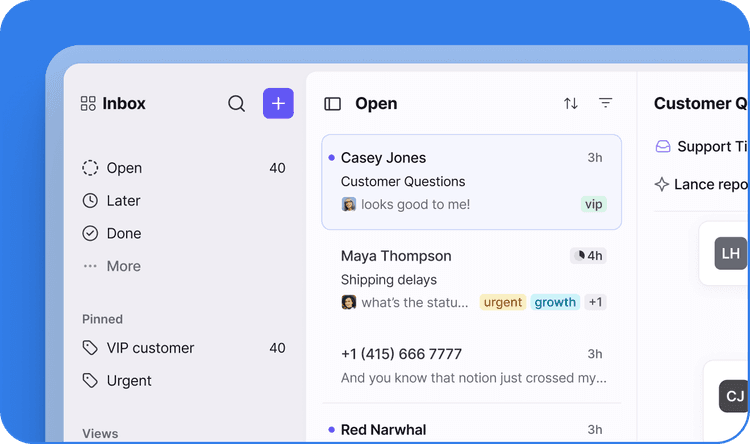
An AI-powered inbox helps operations leaders categorize issues automatically. It routes complex technical problems to engineers and sends billing questions straight to finance.
Measuring Customer Operations Metrics
Data proves your strategy actually works. You must track specific customer operations metrics to justify budget requests and headcount expansion to your executive team.
Categorize your tickets clearly from day one. Defining responsibilities and types of incoming requests helps you identify areas for improvement before they become major crises. Dedicated support operations teams rely on accurate data tagging to fix root causes and boost customer retention. Scaling customer support operations is impossible if you cannot track key metrics like first response time and resolution rate.
Gather the numbers regularly and build the dashboards your managers need. Use a robust analytics platform to track team performance over time. Let the hard data drive your next decision and drive customer success.