



Learn how personalized customer service drives customer satisfaction, boosts loyalty, and supports long-term retention.
A good product gets attention. But personalized service is what really earns loyalty.
Customers want to be seen, not treated like a ticket in a queue. They want someone who understands their history, knows their preferences, and can meet their needs in that moment.
As they move between email, chat, SMS, and social media, one expectation holds steady: consistent, thoughtful care. For support teams juggling dozens of conversations, keeping track of each customer’s story is tough — and missing even a small detail can make an otherwise friendly reply fall flat.
That’s why personalization matters. True personalization goes far beyond using a name or a cheerful greeting. It’s about delivering help that’s relevant and grounded in who the customer is. When teams get it right, satisfaction rises, and loyalty naturally follows.
In this guide, we’ll break down what personalized customer service really means and how to deliver it consistently across every channel.
What does personalization mean in customer service?
Personalization in customer service is about seeing each customer as a real person — not just a ticket or a number. It’s about understanding their needs, remembering past interactions and purchase history, and using that knowledge to tailor the customer experience.
These days, customers rarely stick to a single channel. They might start on email, continue the conversation on chat, and then DM on social before things get resolved. Without a unified view, these interactions can get messy, and customers end up repeating themselves. Personalization is what ties it all together, connecting the dots so every touchpoint is seamless.
When done right, personalized customer service transforms everyday support into meaningful interactions. It strengthens customer relationships and keeps customers coming back.
The benefits of personalized customer service
With truly personalized customer service, even the tiniest interaction becomes a chance to build trust. What could’ve been a frustrating moment turns into a genuine “wow, they actually get me” experience.
And it pays off — literally and emotionally:
Customers feel understood: Remembering a customer’s preferences or past interactions shows you’re paying attention. When you get it right, customers know they’re valued, which strengthens trust and boosts customer satisfaction.
Your team solves problems faster: With context from past conversations, your team can jump straight to solutions instead of asking the same questions again. That repetition has a real cost attached to it. A recent study showed that customers being asked to repeat themselves was among the most common customer-facing coordination failures, showing up across nearly two-thirds of B2B companies in just the past three months. Less back-and-forth means happier customers and a smoother customer service experience.
Stronger loyalty and repeat business: When customers feel understood, they stick around. Brands that nail personalization win more business from repeat customers — proof that thoughtful, tailored support pays off.
Smooth, consistent experiences across channels: Customers bounce between email, chat, SMS, and social. Personalized assistance makes sure their customer journey is seamless, so they don’t have to repeat themselves or start over every time.
Support becomes proactive: AI and data insights help anticipate customer needs and suggest relevant recommendations, so your team can act before problems escalate, improving customer engagement and building long-term customer relationships.
How to provide personalized customer service
When your team has context, communicates with care, and leverages technology wisely, personalization delivers relevant and timely support. Here are some effective ways to make it happen.
1. Use customer history to guide conversations
Every interaction leaves a trail — past purchases, support tickets, feedback, and preferences. When your team taps into that information, they can skip the basics and get straight to solutions. This provides relevant, tailored support, while human agents spend less time digging for answers.
2. Connect all your channels
A connected system ensures your team sees the full story, no matter where the conversation started. That means no repeated explanations — just a smooth, consistent personalized customer experience across all touchpoints.
3. Personalize responses, not just greetings
Using a customer’s name is a start, but true personalization goes deeper. Tailor your recommendations, acknowledge their unique situation, and explain solutions in a way that fits their context. Thoughtful, tailored interactions leave a lasting impression.
4. Listen actively and ask the right questions
Sometimes the best personalization comes from simply paying attention. Listen for the customer’s pain point, ask clarifying questions, and avoid canned responses.
5. Use AI and automation wisely
AI can surface relevant insights, predict what a customer might need next, and automate routine tasks so your team can focus on the human part of support. The goal isn’t to replace live conversations — it’s to enhance them with better context and accuracy.
6. Keep internal notes organized
Up-to-date, detailed notes help your team deliver a consistent experience, even as cases move between agents. When everyone has access to the same customer data, personalized service becomes a team effort instead of a one-off skill.
7. Follow up — even after the issue is resolved
A quick check-in after a ticket closes shows customers that they’re more than a transaction. It also encourages valuable feedback that will help your team stay ahead of recurring issues.
What are some examples of personalized customer service across industries?
Personalized customer service can look completely different from one industry to another, but the core idea stays the same: creating interactions that are relevant, thoughtful, and tailored to each customer’s unique needs.
A unified view of conversations across email, chat, SMS, and social makes this even easier. With all the context in one place, support teams can deliver personalized support consistently, no matter where the customer reaches out.
Here’s what personalization looks like across a few major industries.
Technology
Tech support often deals with power users who want autonomy and casual users who need hand-holding. Personalization means knowing which type you’re dealing with.
When a developer reports a bug, your team can skip the "have you tried restarting?" script and jump straight to API logs and error codes. When a marketing manager asks about a feature, you send a visual walkthrough, not documentation. One customer at a SaaS company was consistently asking about advanced integrations — so the account team flagged them for early beta access to a new API feature and helped customize services around their specific workflow, turning a support pattern into a product opportunity.
Logistics
In logistics, customers care about two things: "Where is my stuff?" and "When will it get there?" Personalization means anticipating those questions before they’re asked.
A national retailer ships thousands of packages weekly, always to the same regional hubs. Instead of generic tracking updates, their logistics partner started sending proactive alerts about weather delays on those specific routes — with rerouting options already in place. The retailer’s ops team could adjust inventory planning before customers even noticed a delay. That’s personalization that saves money, not just frustration.
Financial services
Financial customers want two conflicting things: speed and security. Personalization helps balance both.
A small business owner who regularly wires payments to the same three vendors shouldn’t have to jump through the same verification hoops every time. A bank using behavioral data can streamline those repeat transactions while still flagging unusual activity. On the flip side, when a customer calls about fraud, personalization means the agent already sees recent transaction patterns and can fast-track a resolution without forcing the customer to recap their entire account history.
Travel
Travel is emotional, high-stakes, and full of variables. Personalization can turn a disaster into loyalty.
An airline notices a frequent flyer’s connection gets delayed… again. Instead of waiting for them to call, the system automatically rebooks them on the next available flight, texts the new gate number, and credits their account for the inconvenience. The customer never has to stand in line or explain their situation. A hotel chain tracks that a returning guest always requests a room away from the elevator and prefers oat milk in their coffee. Those details are already noted before check-in. Small touches, massive impact.
Enhance your personalized customer service with Front
Personalized service works best when your team has full customer context and tools that keep every conversation connected — and that’s exactly what Front provides.
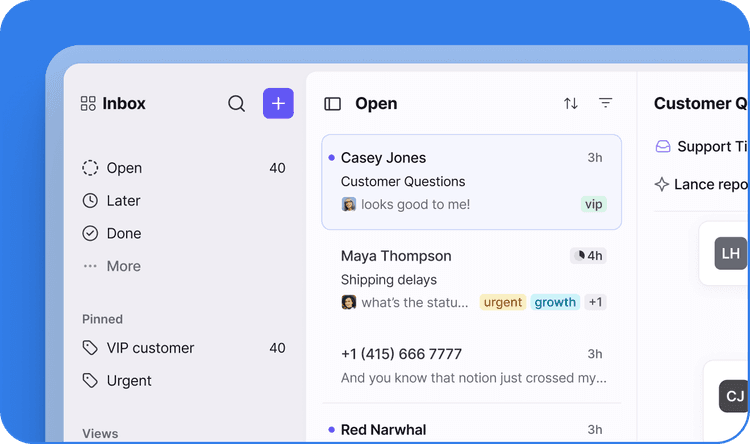
Front centralizes all your customer conversations across email, chat, SMS, social media, and more in a single workspace. That means every reply is tailored and relevant, no matter which channel the customer uses.
With AI-powered insights, Front helps your team anticipate customer needs, suggest smart recommendations, and track preferences across all touchpoints.
Don’t just offer support — create loyalty-building experiences. Explore Front today and see how your team can deliver personalized customer service that delights customers and strengthens your brand.
FAQs
What’s personal service vs. personalized service?
Personal service is friendly, professional support — answering questions politely and helping customers when they need it.
Personalized service takes it a step further. It adapts every interaction to the individual, using their preferences and past interactions to provide relevant solutions.
How does personalization improve customer experience?
Personalization improves the customer experience by making every interaction relevant and efficient. It helps your team:
Avoid making customers repeat themselves across channels
Solve problems faster by using insights from past interactions
Provide helpful recommendations before the customer even asks
Keep the experience consistent, no matter how they reach out