


We’ve calculated the real cost of running B2B customer operations on B2C software.
The typical B2B company spends nearly 3 hours coordinating for every 1 hour spent solving customer problems. That’s not a struggling company. That’s the baseline.
Resolution times are down. CSAT is steady. The dashboards look fine.
But there’s a number the dashboards don’t show. We surveyed 665 B2B customer service, operations, and account management leaders and found a cost that doesn’t appear in any report they’re running: the time teams spend coordinating work instead of solving customer problems. We’re calling it the Coordination Tax.
research: The Coordination Tax
The Coordination Tax quantifies the hidden cost of cross-team customer work. The report shows why teams spend nearly 3 hours coordinating for every hour solving customer problems — and what the top performers do differently.
What is the coordination tax?
B2B customer work is complex by default. A single request can touch three teams before anyone solves it.
A customer escalates a contract dispute. Finance needs to review the terms. Sales needs to weigh in on the relationship. Operations needs to coordinate the response. By the time the problem gets solved, most of the time spent on it was spent finding the right person, managing handoffs, re-explaining context, and closing loops between teams. That’s the tax.
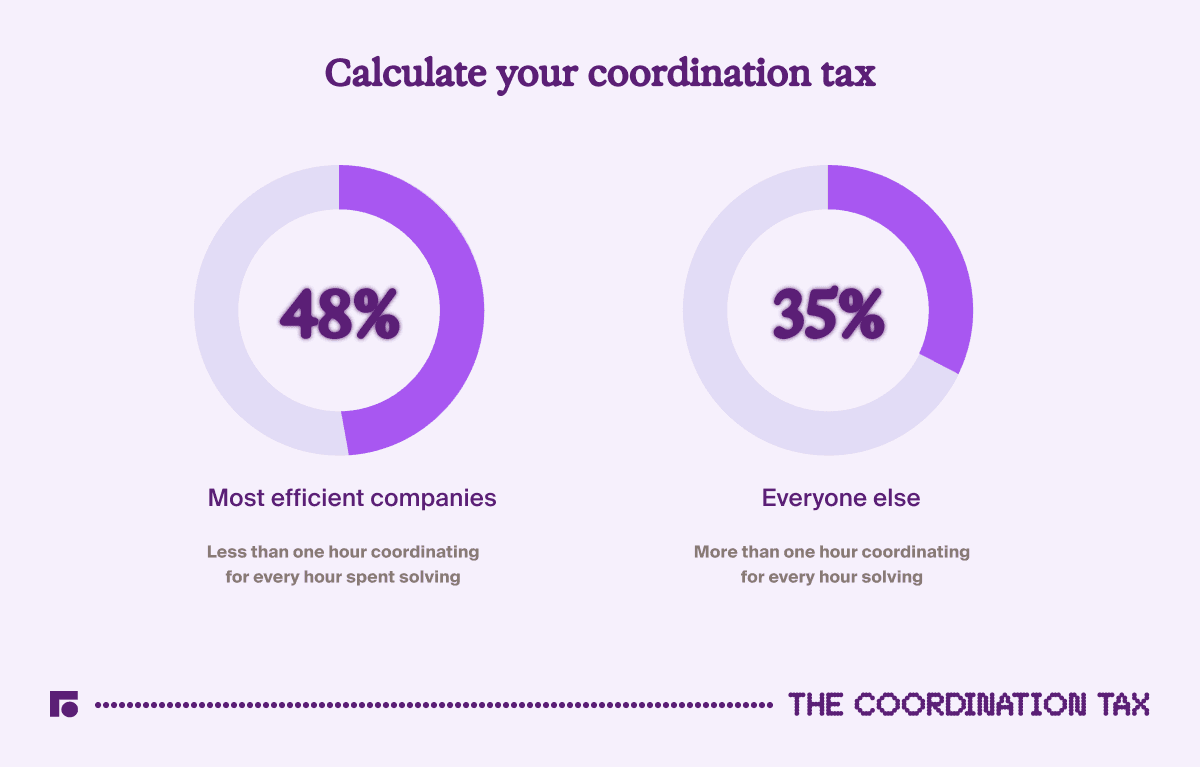
What does the typical company pay?
Nearly 70% of companies in our study spend at least 2 hours coordinating for every hour solving. And most of them have no idea how much time goes to coordination because the platforms they rely on were never designed to measure it. They track resolution time, CSAT, first response. All outcome metrics. The coordination that makes those outcomes possible? Forty-two percent of companies don’t track it at all.
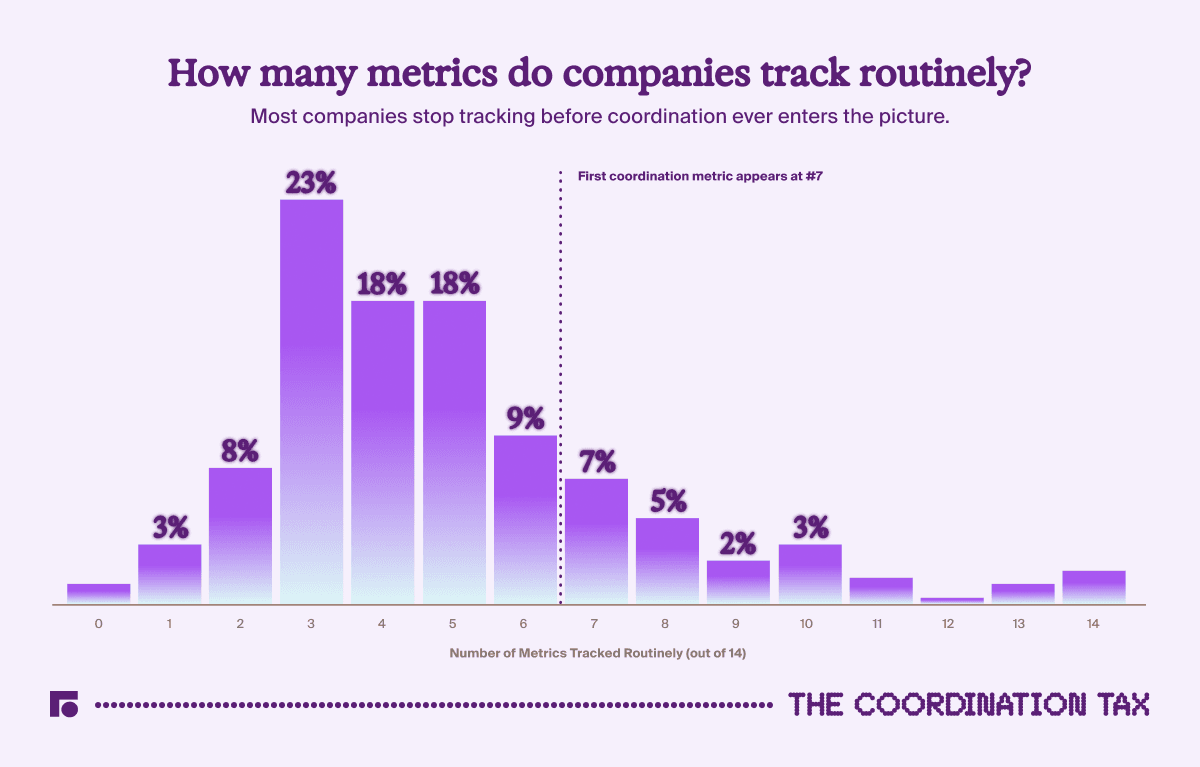
Better software. Better AI. Same tax bracket.
B2B companies poured money into sophisticated platforms. Resolutions got faster. But the share of time teams spent actually solving problems stayed flat, regardless of how advanced the system was. That’s because most customer service and operations platforms are designed for B2C, where a customer asks one question and one agent answers it. B2B is never that simple. The coordination happens outside the platform, in email threads, Slack channels, and status meetings the software never sees.
Then companies added AI, and the coordination tax stayed exactly where it was. 93% of companies in our study use AI in customer operations. But 71% experienced significant AI issues in just the past three months. The top failures weren’t automation problems. They were coordination problems: AI creating additional work for teams, losing context during handoffs, routing requests to the wrong people. AI inherited the coordination gap. Then scaled it.
“Teams are working around broken systems. AI won’t fix that. Until companies address the coordination gap, the problem won’t go away.”

One in seven companies found the tax break
Only 14% of the companies in our study spend more time solving than coordinating. They’re not doing easier work. They didn’t hire more people. They’re not in simpler industries.
So what did they do differently? And what is the tax actually costing the other 86%?
What they did differently, and what it reveals about where your team’s time actually goes, is in the full report.