



A practical guide for B2B teams on customer feedback analysis. Learn how to convert feedback into actionable insights that drive better business outcomes.
Your customer service team already collects more feedback than ever, with surveys piling up and support tickets streaming in through multiple channels. On the surface, it may seem like everything’s under control — but in reality, customer satisfaction (CSAT) stays flat and recurring issues affect key accounts.
As your business grows, so does the complexity of managing customer feedback. More stakeholders get involved in the customer journey, and more handoffs dilute important context. Many leaders start to question if current workflows can keep up.
This is where most B2B teams get stuck.
The problem isn’t listening, but following through. Without a system for turning feedback into real changes, support teams fall out of sync, and small pain points become a revenue risk.
In B2B environments, customer feedback analysis is less of a retention play and more of an operational advantage. As complexity increases, it helps your team respond effectively and consistently to every customer concern. And the payoff is real: 44% of customers return to brands that listen to feedback and use it to improve their experience.
Let’s take a closer look at analyzing and using customer feedback so it results in measurable change.
What is customer feedback analysis?
Customer feedback analysis is the process of turning scattered input into usable insights. It shows what problems need attention, who’s responsible, and how to implement changes. The goal is to keep your team aligned so you consistently deliver exceptional customer service.
Feedback comes from multiple touchpoints: support tickets, sales calls, account reviews, and even casual client emails. Analysis connects those dots, helping customer support agents to take coordinated action and address customer needs effectively.
Metrics and dashboards reveal patterns, but they don’t drive change on their own. That’s why feedback analysis creates a system for prioritization, accountability, and follow-through, keeping teams in sync as volumes grow.
When that system breaks down, feedback piles up and insights get lost between teams — leaving you with more input but no real progress.
How to analyze customer feedback: 6 steps
Customer feedback analysis falls short when it only looks backward. To succeed, teams need to use that feedback proactively to guide decisions that strengthen customer loyalty.
Here’s how B2B teams can operationalize feedback and provide the best possible customer experience.
1. Collect customer feedback
Pull feedback from every touchpoint and channel so you get a complete view of customer needs. For example, recurring comments about confusing onboarding should appear alongside net promoter score (NPS) survey notes highlighting the same pain points.
2. Categorize and tag feedback
Organize customer feedback into categories that match your business priorities, such as product issues, process bottlenecks, or feature requests. Then, tag items to reassign responsibility easily. A note about delayed responses might be tagged under “support workflow” so the right team can take ownership.
3. Analyze customer sentiment and key metrics
Look beyond comments and reviews to understand the tone and urgency of customer feedback. Are customers frustrated, confused, or satisfied? Combine these insights with metrics like CSAT scores or resolution times to figure out which items need immediate action.
A feature request repeated in negative tickets signals higher urgency than a positive suggestion buried in a customer survey.
4. Identify trends and recurring issues
Look for patterns across accounts and channels. Multiple tickets about the same issue — or consistent complaints from high-value customers — highlight what needs to be addressed first. If 10 clients report difficulty using a workflow, escalate that trend instead of letting it sit in reports.
5. Act on customer insights and close the loop
Assign ownership and define next steps, making changes visible to every team or department. When problems arise, adjust processes based on what customers are telling you and involve stakeholders as needed.
Always follow up with customers to confirm their issues have been resolved. A support manager might reach out to a client after a workflow adjustment to make sure it worked as intended.
6. Use the right tools for customer feedback analysis
Choose customer feedback analysis tools that centralize comments, track actions, and hold teams accountable. Project management and support platforms keep feedback from getting stuck in inboxes or spreadsheets, and route it to the right people so they can act quickly.
Keep in mind: These steps only drive impact when analysis and action work as a single system — not in separate silos.
4 sources of customer feedback
As businesses grow, feedback spreads across customer surveys, support conversations, and open-ended input. Each source captures a different piece of the customer experience puzzle — viewed together, it can be challenging to determine which issues take priority.
Here are the most common customer feedback data sources and what they reveal.
1. Surveys
Surveys give you structured data at scale: NPS points to customer loyalty, CSAT scores track customer satisfaction, and the customer effort score measures ease of interaction. These metrics uncover patterns across accounts and products that aren’t obvious in individual interactions.
2. Customer support interactions
Support conversations reflect real-time customer needs and frustrations. Tickets, chats, and calls show where processes break down while revealing recurring pain points. One complaint about delayed onboarding may seem minor, but dozens point to a workflow that’s causing friction.
3. Customer reviews and public feedback
Online reviews, social posts, and testimonials show how customers perceive your brand externally. This public feedback reveals reputational risks and flags trends that internal teams might miss, such as gaps in product adoption or unmet expectations.
Tracking reviews helps teams see the experience from the customer’s perspective and tackle issues before they affect revenue or retention.
4. Open-ended qualitative feedback
Qualitative customer feedback from interviews, focus groups, and survey responses captures emotion and nuance. This type of feedback explains the “why” behind trends in customer sentiment or CSAT scores. Repeated frustration with a product feature might reveal underlying confusion that metrics alone can’t measure.
Bringing it all together
No single source tells the whole story. But when teams combine data from surveys, reviews, and qualitative metrics, scattered signals start to form a clearer picture. Connecting these insights helps you prioritize the most important issues and take action to address customer needs.
Leveraging customer feedback: Customer analysis examples
The following examples show how real B2B teams worked with Front to turn their customer feedback into lasting improvements.
Reed & Mackay: Personalized service at scale
Reed & Mackay, a corporate travel and event management company, used Front’s threaded emails and analytics to identify recurring client requests.
Their team reviewed customer feedback from bookings, support tickets, and account managers to understand where customer service gaps occurred. Then, they assigned ownership for each account and automatically routed requests to the right specialists — turning a fragmented workflow into high-touch, personalized support.
The result: a 43% productivity boost and a 97% CSAT score, all while maintaining their reputation for exceptional service.
Global: Early issue detection and proactive action
Global’s operations team manages thousands of advertising campaigns across multiple channels and communication systems. To improve response time and meet service targets, Global turned to Front for its shared inboxes, automation, and AI-powered sentiment tagging.
Instead of treating each ticket as an isolated issue, the company introduced clear ownership and automated routing, ensuring every request reached the appropriate support specialist. Managers could spot negative trends early and step in before issues escalated.
Using Front’s advanced tools and AI capabilities, Global reduced average response times to 1.5 hours and consistently met 90% of response targets.
In both cases, customer insights only made an impact because they were integrated into daily workflows. The goal of customer feedback analysis isn’t perfection — it’s building a system where input continuously shapes how your team operates.
Enhance customer feedback analysis with Front
Many teams struggle to act on customer feedback as volumes grow. Signals spread across surveys, support tickets, and emails, making it harder to stay close to the customer experience.
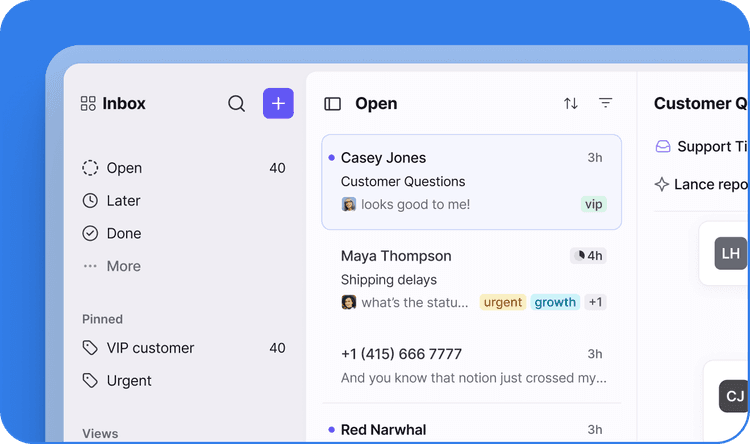
Front helps B2B teams cut through that complexity. As a customer operations platform, Front connects feedback to real customer conversations and assigns clear ownership for tasks and actions.
Features like Smart CSAT let you track customer sentiment directly, not just through survey responses. This provides a more accurate view of how customers feel, especially in moments traditional CSAT or NPS might miss.
Here’s how Smart CSAT works:

By bringing all these insights into a single, shared view, B2B teams can stop chasing scattered inputs and focus on better understanding and serving their clients.
Explore how Front works with you to keep customer feedback visible and actionable.
FAQs
How often should B2B teams collect customer feedback?
B2B teams should collect feedback continuously, as this helps spot issues early, track trends over time, and make sure customer experiences evolve alongside changing needs.
What tools do you use to analyze customer feedback?
Teams use tools that centralize customer feedback across channels so it’s easy to spot patterns and trends. Project management platforms and operations software can help assign ownership, track actions, and turn customer insights into fast follow-up.
What is CX analysis?
Customer experience, or CX, analysis examines customer interactions and feedback to understand their experience, identify pain points, and uncover opportunities for improvement. The goal is to translate data-driven insights into measurable changes that enhance CSAT scores.