


90% of companies let AI agents answer customers with no human involved. If agents made a mistake, 35% would most likely find out from customers.
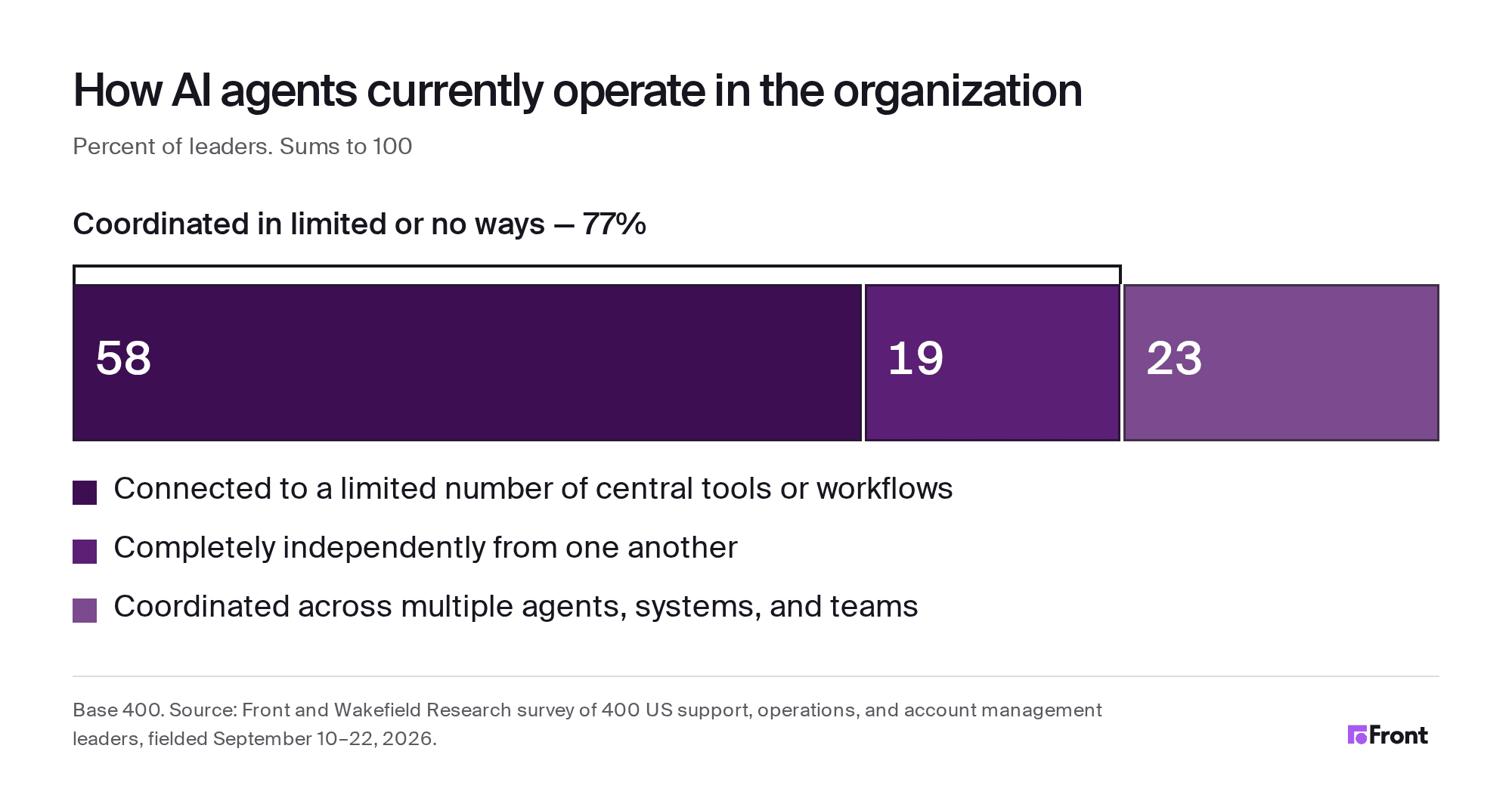
AI agents are officially a part of the workforce. Nine out of 10 B2B businesses allow AI agents to help customers with no human involved. But they weren’t properly onboarded. Fewer than a quarter of businesses run their AI agents coordinated across systems, teams, and other agents.
That’s like a new hire who’s cleared to answer a client’s billing question, with a login to the customer relationship management (CRM) system but no access to the contract terms. When the question becomes a dispute, the context splinters at handoff to finance, and the customer is left repeating themselves. Meanwhile, another agent is an internal expert on contract exceptions, but they couldn’t share knowledge with the new hire.
That’s the orchestration gap: AI agents are live with customers, but they’re not working together across your systems and teams.
The customer ends up in the quality assurance loop: 35% of companies are most likely to learn about an AI agent’s mistake from the customer.
But when agents are coordinated across multiple agents, systems, and teams, performance follows. These organizations are 66% more likely to run agents autonomously and with few customer complaints.
Front set out to understand how businesses are using multiple agents with their customers today. We surveyed 400 support, operations, and account management leaders about AI agents already live in their organizations — what those agents can reach, what they are cleared to do with customers, and who notices when one gets something wrong.
The majority of AI agents are working with partial context
Most businesses are running AI agents that are only half wired. 58% of businesses say their AI agents are connected to a limited number of central tools or workflows. 19% say their agents operate completely independently from one another.
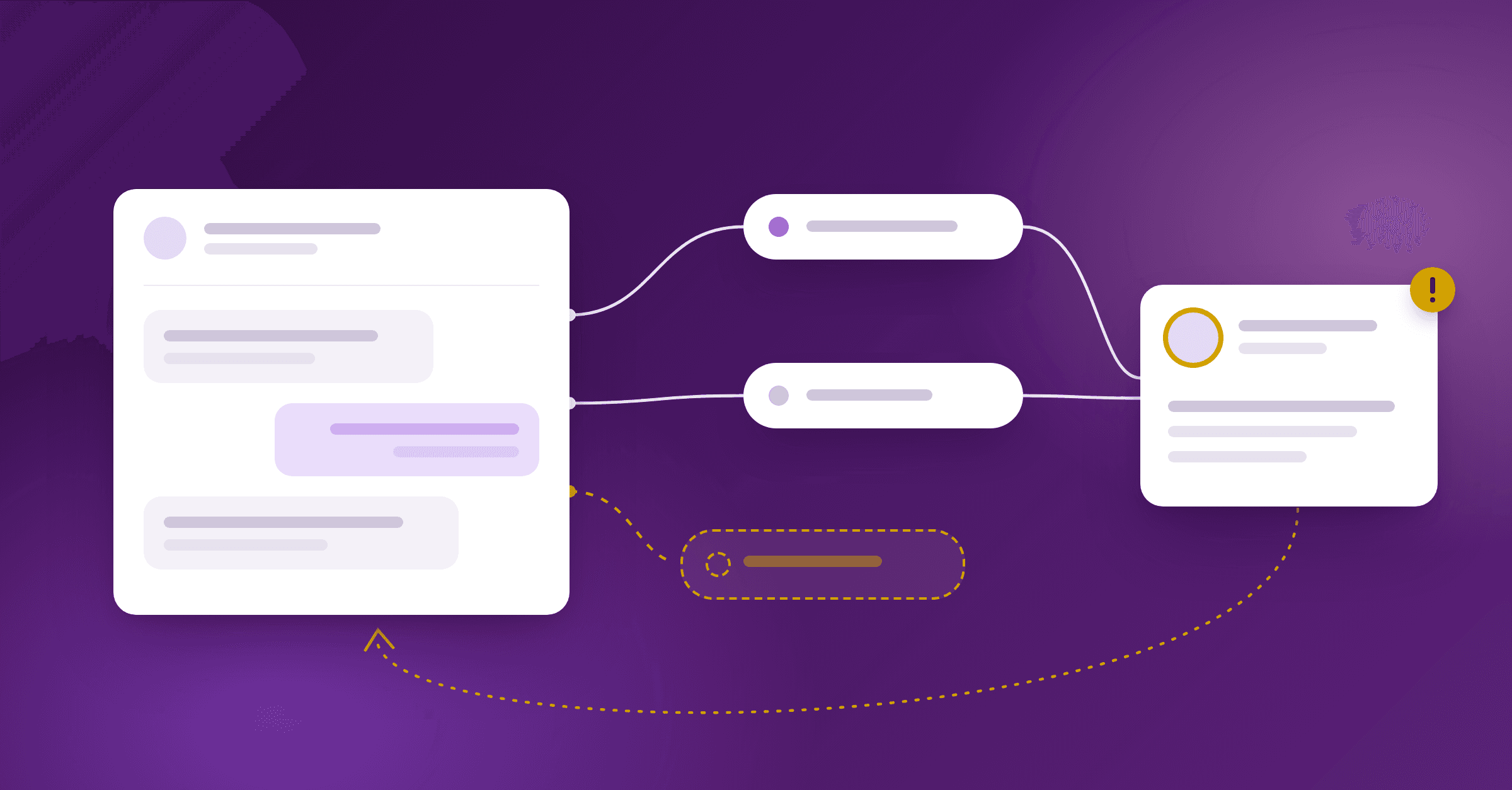
In a simple, transactional support ticket like canceling a subscription, the AI agent can resolve the issue by accessing the CRM and billing platform. But B2B business seldom works that way. A single customer request often passes through several teams and systems. When the backstory doesn’t travel with the thread, that’s where mistakes can happen.
Customers are catching AI agent mistakes
Nine in 10 organizations allow AI agents to respond to customers with no human stepping in. The level of control over an AI agent varies. 43% only allow it in limited situations, 37% sometimes, and 10% regularly.
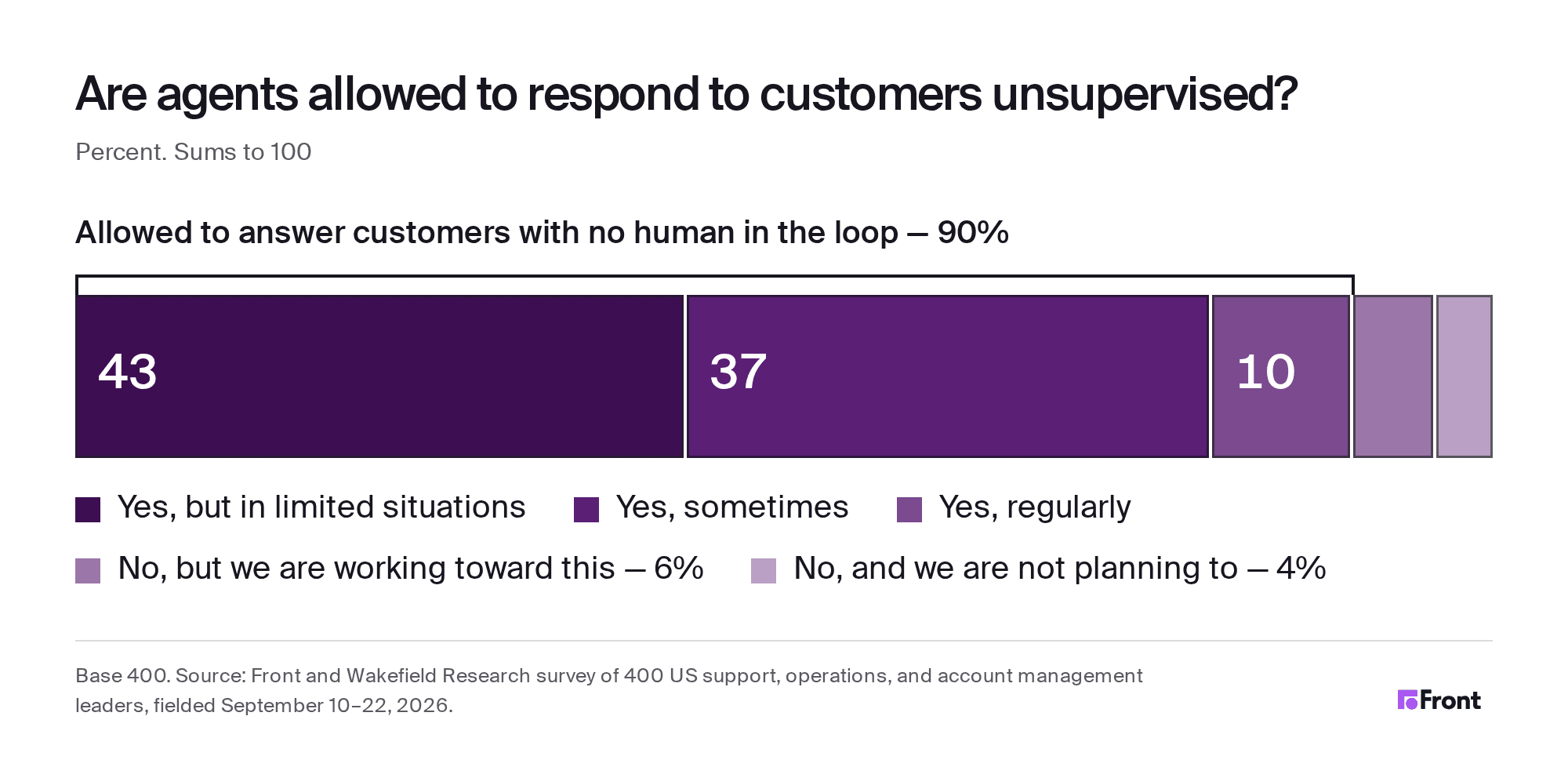
But just like humans, AI agents make mistakes. Among the businesses that allow agents to respond to customers, 79% receive complaints caused by an agent’s work at least sometimes.
So who catches the mistake? If an AI agent gave a customer wrong information, 65% of businesses would most likely find out through an internal check: 42% through an automated alert or monitoring and 23% through an internal audit or spot check.
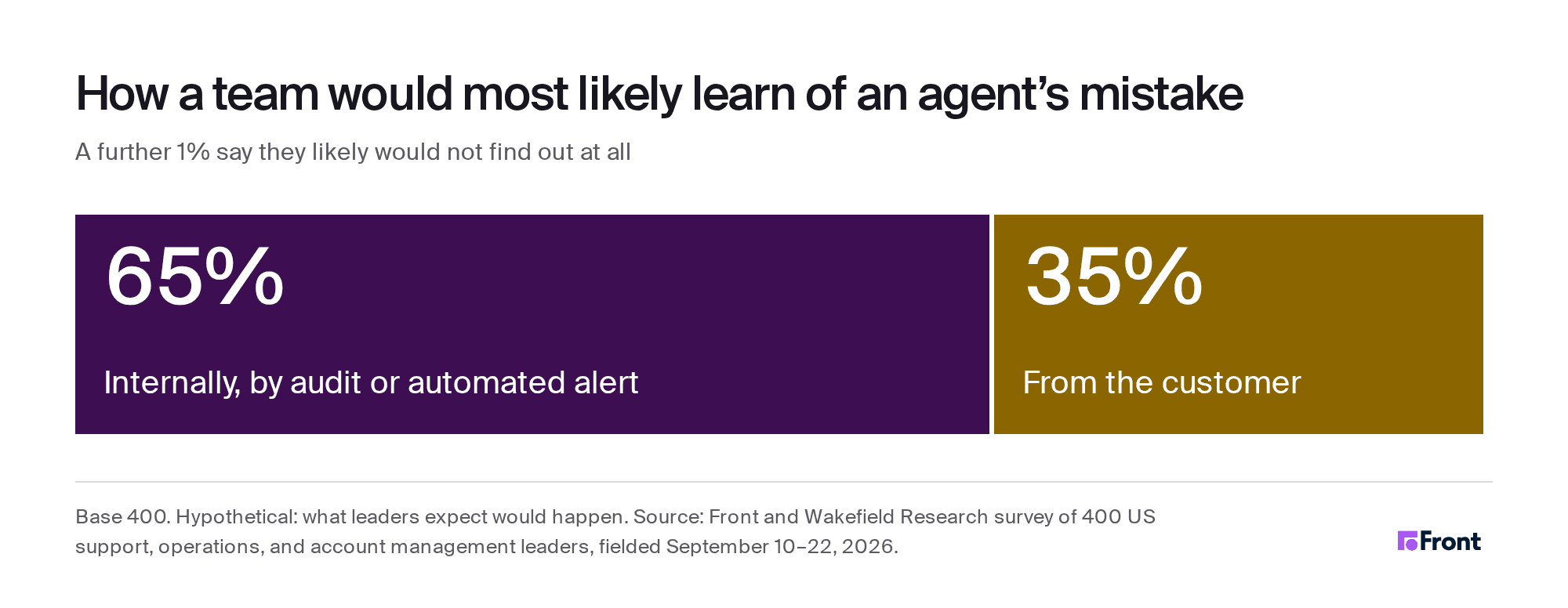
However, over one in three businesses would most likely hear it from the customer. One wrong move by the AI agent can send teams digging for the root cause. For example, an AI agent lists an incorrect clause within a contract that the customer flags to the customer success manager. Customer success needs to cross-reference the system of record to review historic conversations, loop in the account manager to confirm what was discussed, and tap legal to verify what was written in the contract.
Unfortunately for many B2B businesses, measuring agent performance is still on the to-do list.
Few teams proactively monitor agent performance
Only 26% of businesses measure their agents on a formal schedule. Most of the rest are checking their agents informally or after something breaks.
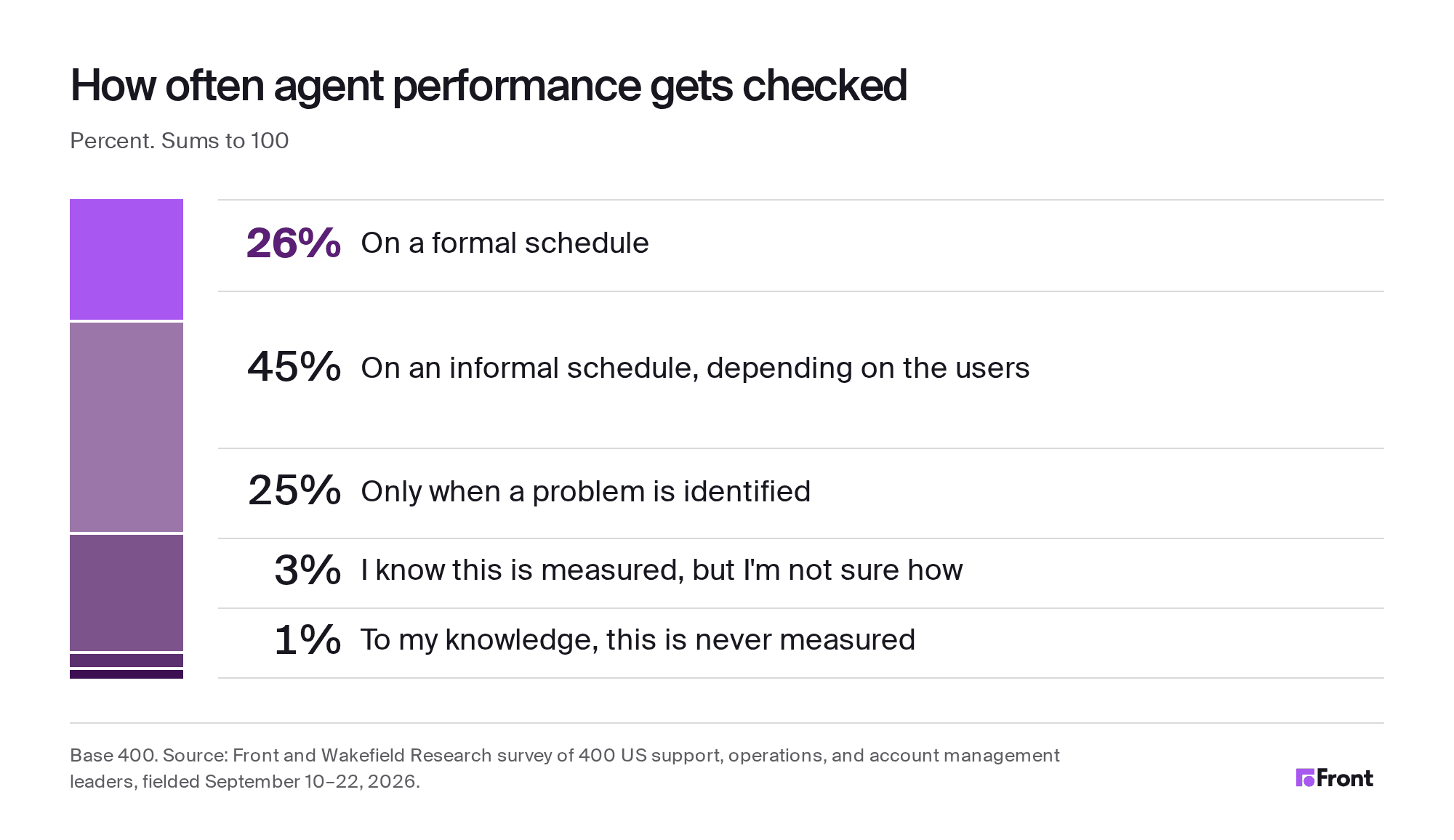
Part of the problem is what teams can see:
35% say reporting options are missing
35% lack options for measuring performance
40% report low visibility into agent activity
Businesses are trying to understand just how autonomous their agents are and whether or not they can trust their work. While some metrics are tracked, no standard exists.
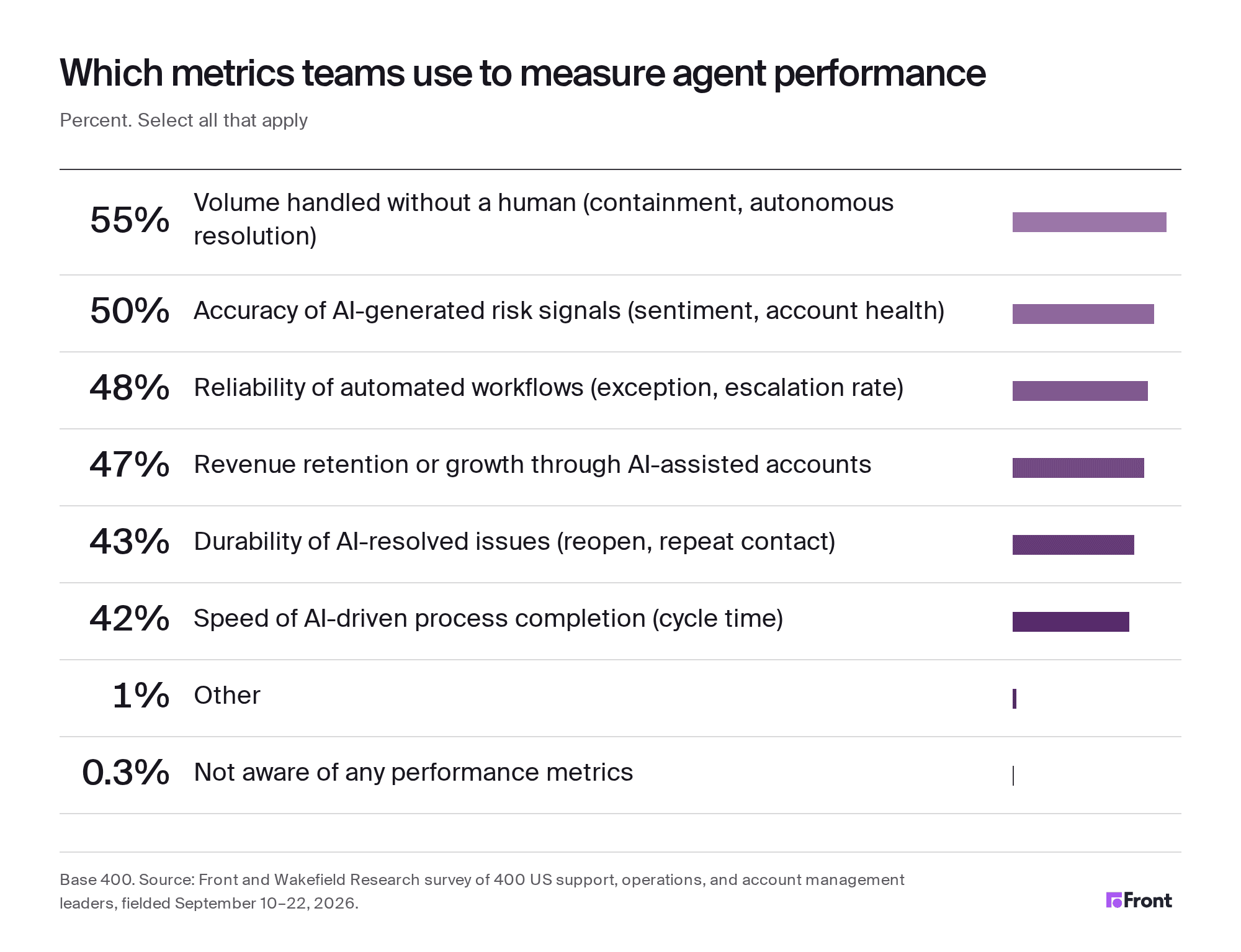
One AI agent vendor or many: The governance dilemma
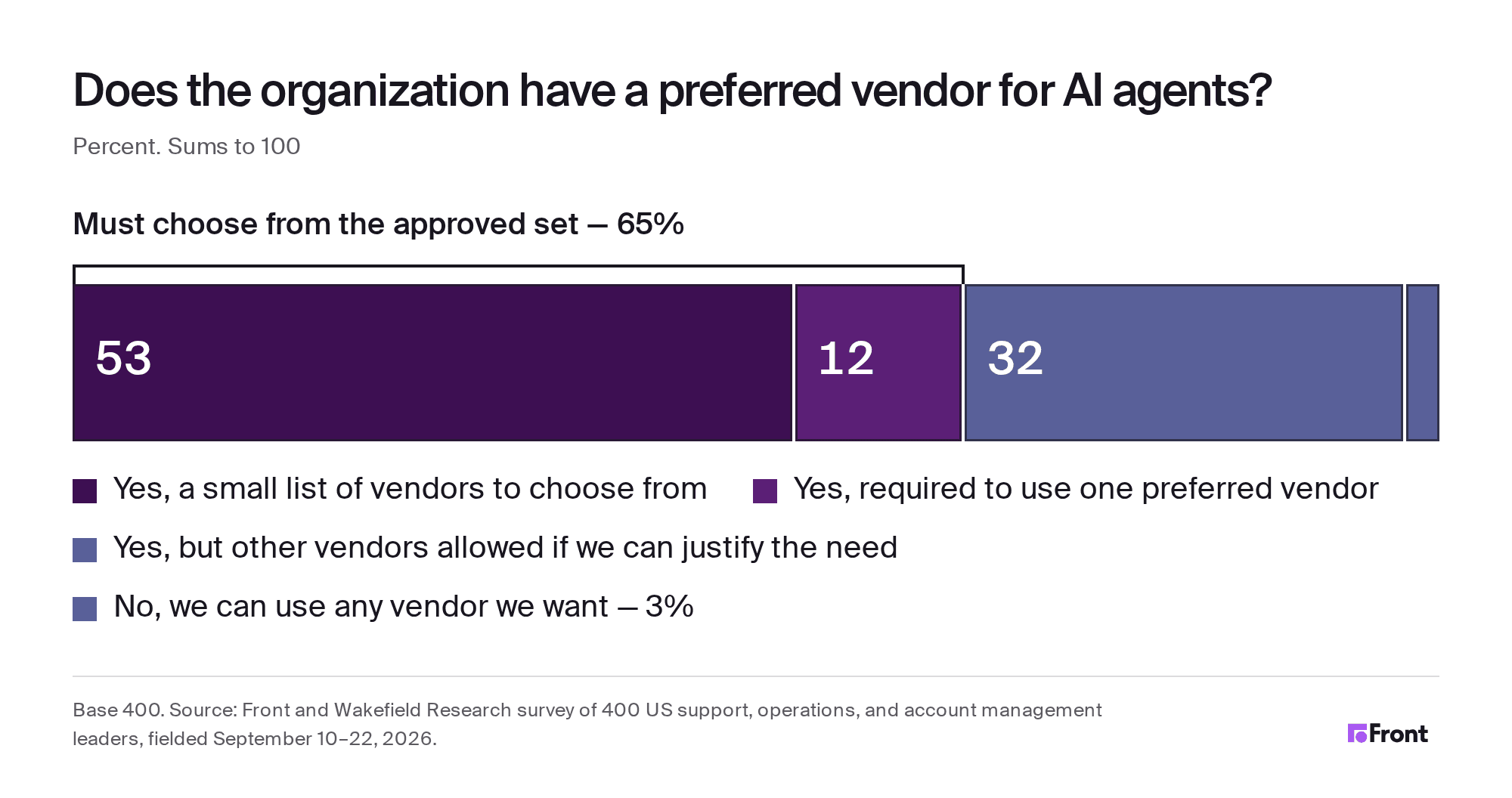
98% of organizations have a preferred vendor or an approved list for AI agents, and 65% must choose from that approved set with no workaround. But not all teams stick to the rules.
Why are customer-facing teams tempted to look beyond IT’s preferred vendor list? 47% run into issues connecting the approved agent to other internal systems. Sometimes the connection works, but the AI agent struggles to know what information is relevant. A Salesforce CRM is a prime example: data hygiene can be poor, and too many custom fields require substantial institutional knowledge.
When the approved list falls short, most teams say they’d keep moving. Among those with a preferred vendor or list, 78% would not wait for an approved agent to offer what they need. 35% would modify an approved agent, 25% would use another vendor’s agent anyway, and 18% would bypass the list and build their own.
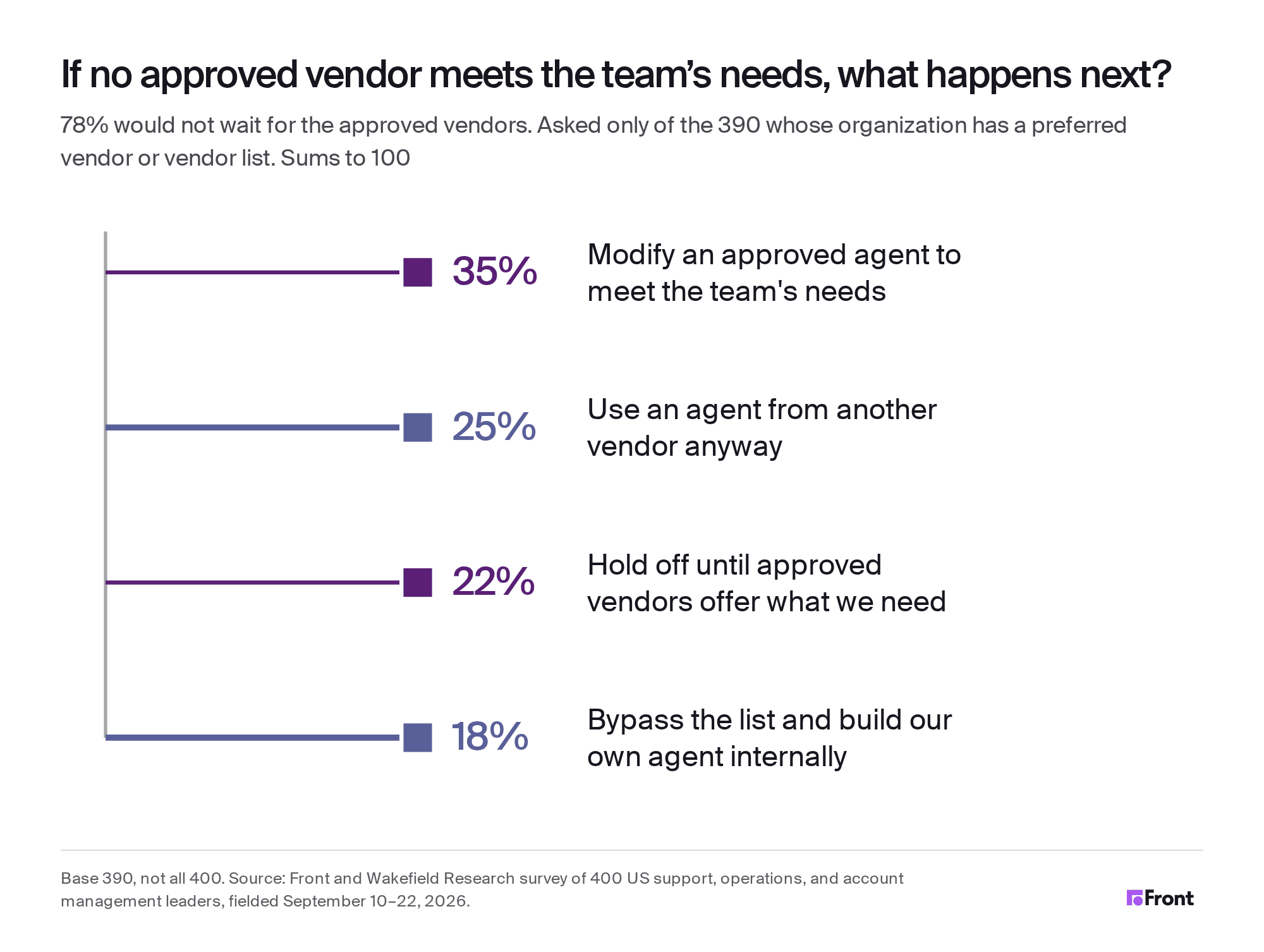
Every one of those workarounds adds another agent that may start the job half-wired. As businesses add more AI agents to their team, they need visibility into what each agent is doing in relation to their human team. Handoffs become more sophisticated, and system cross-references get more complex.
Integrating your agents right saves a lot of downstream headache, but calls for a close look at your setup and workflows. For AI agents to be successful, they need to be embedded in your processes, not bolted on top.
Four questions to ask about any customer-facing agent
The goal is for every agent you run to work like they’re part of the team. Here are four pillars to ground their work in:
Visibility: Are you able to see every step each agent takes? Every action should be traceable on the same record your team works from: the thread, the account, the history.
Control: Does every agent have a defined scope? Document what it can answer alone, what it can’t, and when it hands off to a human or another agent.
Confidence: If an agent got something wrong this week, who would find out? If the honest answer is the customer, that’s where the work starts on mapping out accountability on the backend.
Performance: Is every agent monitored on a cadence? Whether built in-house or brought in from a third party, agents should be tracked to ensure they continuously meet your standards.
Bring all of your AI agents and teams together in Front
Front is the customer operations platform built for B2B complexity. Teams bring their own agents, whether custom Autopilot agents or ones built elsewhere, and Front gives them the shared context, governance, and handoffs that keep them working alongside your people. Every agent starts from the same conversation history your team does, so you can see what it did, set what it’s allowed to do, and score it alongside everyone else.
More than 9,300 companies run on Front, including Uber Freight, Navan, and Stripe.
See how Front works when your agents are your teammates
About this research
Wakefield Research conducted this online survey for Front between September 10-22, 2026. 400 US-based support, operations, and account management leaders with a minimum seniority of manager completed this survey through an email invitation. Respondents work at B2B or mixed B2B/B2C companies of 51-5,000 employees that use a minimum of two AI agents, and range in industries including technology, logistics, financial services, professional services, manufacturing, and travel.
Results of any sample are subject to sampling variation. The magnitude of the variation is measurable and is affected by the number of interviews and the level of percentages expressing the results. For the interviews conducted in this study, the chances are 95 in 100 that a survey result does not vary, plus or minus, by more than 4.9 percentage points from the result that would be obtained if interviews had been conducted with all persons in the universe represented by the sample.
Media inquiries: [email protected]