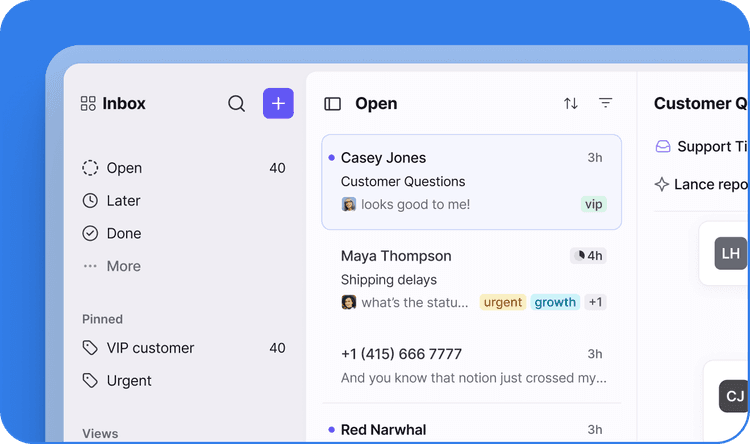


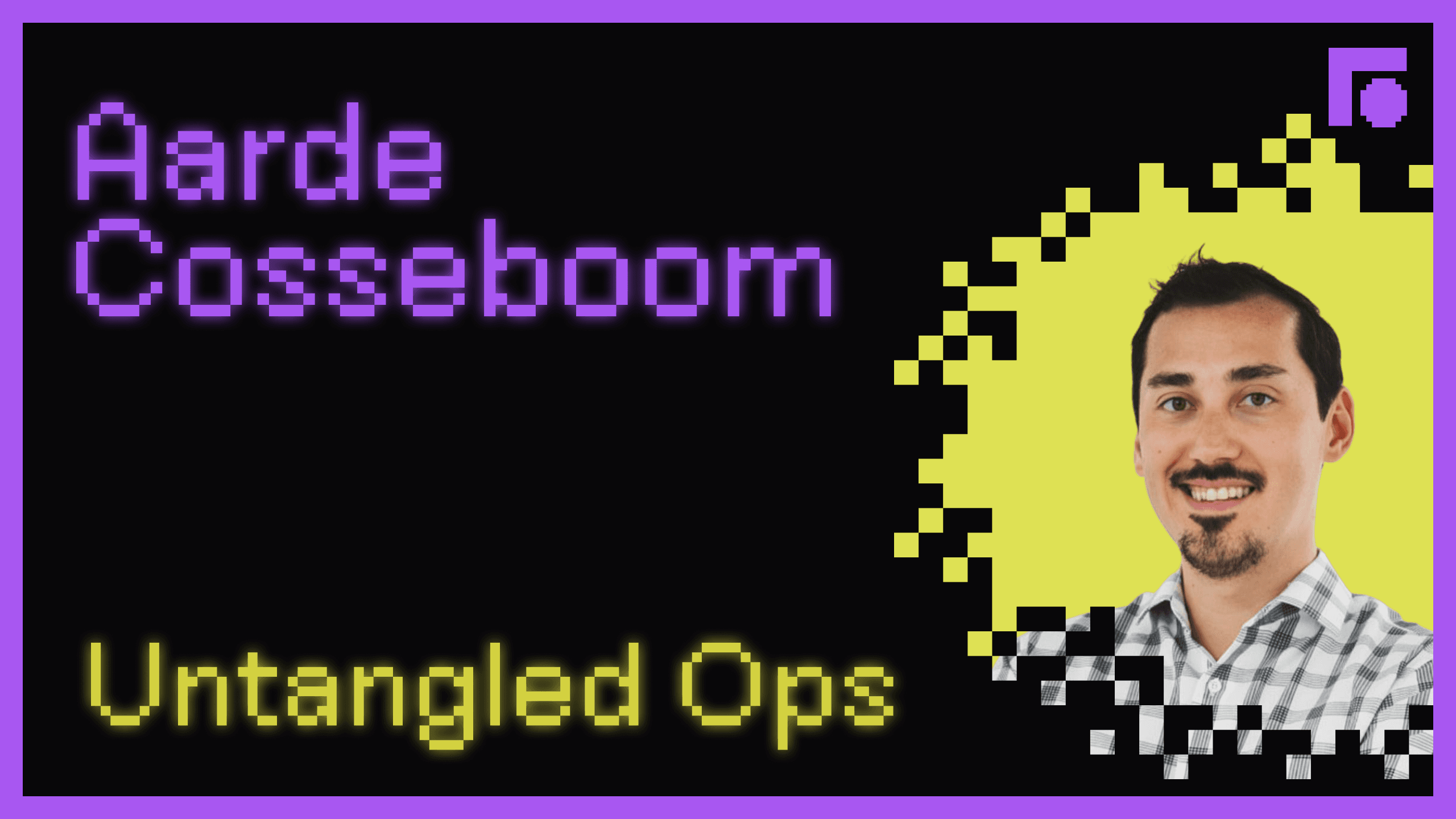

Palomarr’s Aarde Cosseboom lays out what has to be true before AI helps: a clear business outcome, an unbroken process, and a frontline equipped to act.
In contact centers and customer operations, the coordination tax shows up as requests that bounce up escalation tiers, agents boxed in by standard operating procedures, and tools that were supposed to help but just added another tab. On Untangled Ops, Front’s interview series, we sit down with the operators who’ve spent careers wrestling that overhead down, while they play a retro game of Snake. Because a system that keeps growing until it crashes into a wall is a fair picture of what unmanaged coordination does to an operation.
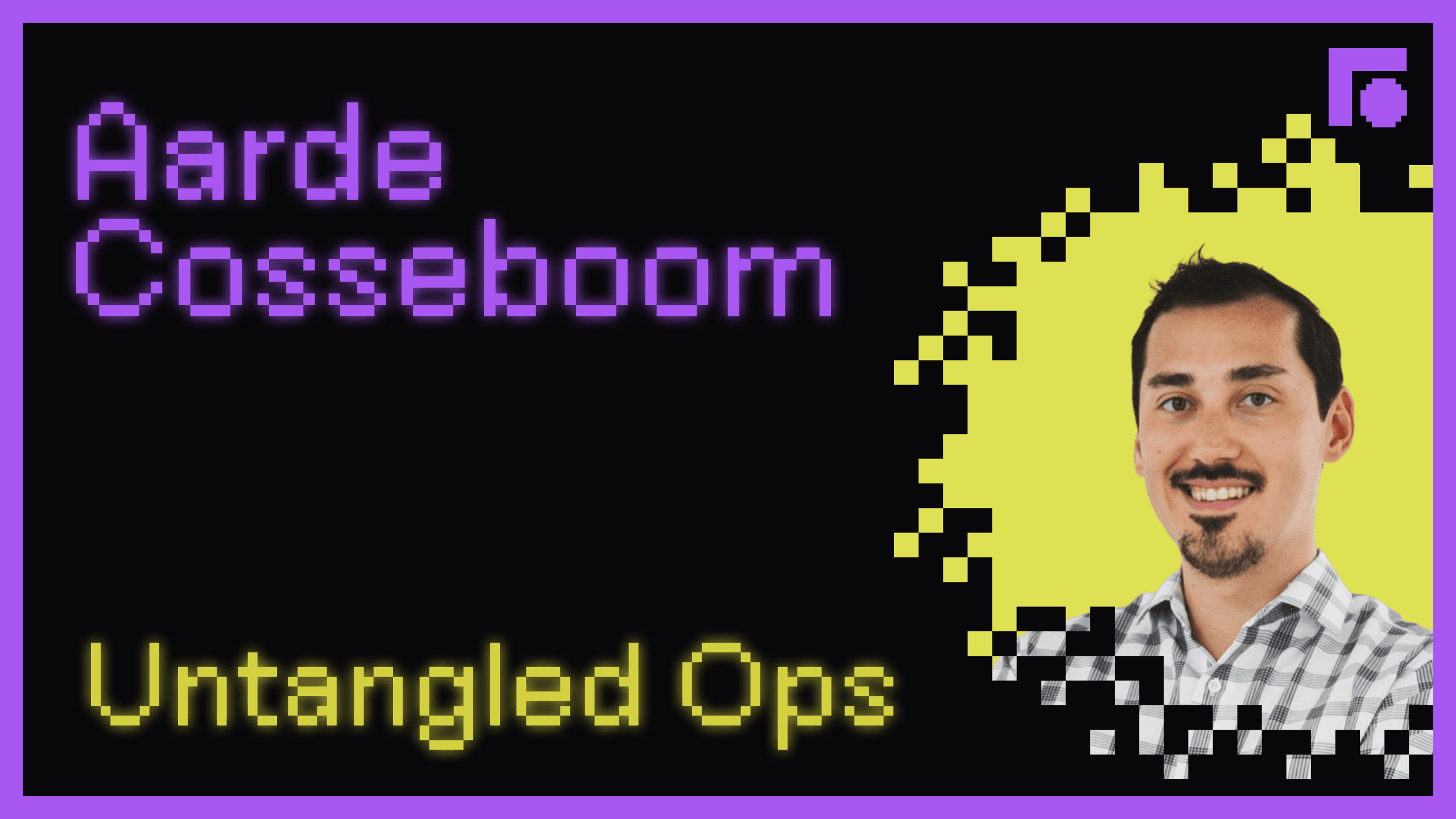
In episode four, host Ally Anderson, VP of Global Partnerships at Front, sits down with Aarde Cosseboom, CEO and founder of Palomarr, a service that helps companies find and compare the technology that actually fits their business. Aarde has spent more than two decades in the contact center and customer operations world — starting as a frontline agent and going on to build and transform large-scale CX teams. He walks through the operational grid model that traps requests moving vertically up escalation tiers when they should move horizontally across teams, why his first answer to "what AI should I buy" is to slow down and name the real problem, how real-time agent assist became the frontier after a decade of routing and self-service, and the beehive-and-bat analogy he uses to explain what happens when a market shift hits an operation that isn’t built to feel it.
Key takeaways
The coordination tax hides in process and tooling, not people. Teams hire capable human agents, then fail to set them up with the right process or tools to act.
Requests get pushed up the chain instead of over to the team that can solve them. Rather than follow a typical escalation process, the frontline could be better empowered to resolve requests on the spot.
Name the business outcome before reaching for AI. Bolting tech onto a broken process just scales the inefficiency.
AI has moved from routing to real-time agent assist. Now it arms agents with context in the moment to make the call themselves.
A healthy operation runs like a beehive — until the bat swings. A market shift surfaces pain where you didn’t plan for it.
Full transcript
Transcript has been edited for brevity and clarity.
Ally Anderson (host): Hey everyone, and welcome to Untangled Ops, where we’ve gathered customer experience leaders who’ve turned operational snafus into success. I’m Ally Anderson, VP of Global Partnerships here at Front, and your host for this episode. Today we’re taking a closer look at the work between the work that’s taking down teams as they help customers: clunky handoffs, lost context — that coordination tax that’s often paid but not tracked. And while we chat about complex workflows, our guest will be playing a not-so-complex game of Snake. It’s an honest representation of what an operation looks like when coordination goes unmanaged — the complexity keeps growing until the entire operational system crashes into a wall.
We’re joined here today by Aarde Cosseboom, CEO and founder at Palomarr, a service provider that helps companies find and compare technology that fits their business needs. Aarde has spent over two decades inside the contact center and customer operations world, building and transforming large-scale CX teams. Aarde, welcome to the show. Are you ready to play some Snake?
Aarde Cosseboom (guest): Yeah. Ally, thank you so much for the introduction. I’m a little terrified to play Snake and multitask while answering questions — the questions are a lot easier. I’m excited to dig into it and answer as many questions as possible.
Ally: I love it. And no pressure, but I know both of us are highly competitive people, so here’s hoping you’re at the top of the leaderboard at the end.
Aarde: Yeah, absolutely. But I’m probably going to be at the top of the crashing-my-snake-into-the-wall board, whatever that is.
Ally: All right, Aarde, first question. When you walk into a new client’s operation today, what is the clearest sign that they’re paying a coordination tax without knowing it?
Aarde: Great question. I’ve been in the industry for about twenty years now, and I started as an operator — as an agent, taking calls, chats, emails. So I know my way around phone calls, chats, emails, omnichannel support, outbound. That was about twenty years ago, so the technology was a lot different — there wasn’t a lot of agentic AI, there weren’t a lot of agent-assist tools, we barely even had a knowledge base.
What I’ve seen over the years, after growing out of that into leadership and running small, medium, and even large contact centers, is that there’s a lot of technology bloat, but also some process bloat. And that usually causes operational inefficiencies. The way I like to say it is the three Ps: people, product — which is technology — and process. Where I see the biggest downfalls, or the biggest inefficiency, is around the process and the product, or the technology.
Usually, for call centers or agents — inbound, outbound, customer service, contact center, whatever you want to call it — we hire really skilled and capable individuals. Where we fall short as organizations is we don’t give them the tools to succeed. Their technology is not infused with AI. They don’t really have a lot of operational bandwidth to approve things beyond what they’re doing today, so they have a hard time with the process. There’s a standard operating procedure that prevents them from completing the task at hand.
Ally: Yeah, for sure. It’s almost like traffic engineering, right? If the physical roads are drawn wrong and converge into a massive bottleneck — which is the tech layer — then changing the speed limit, which can be the process, or buying faster cars for people, doesn’t really solve the problem. It just gets everyone into a traffic jam faster. So I love that, thank you.
Ally: Second question. You’ve described a grid model in the past that impacts coordination overhead. Can you share what that looks like in practice, and where does AI fit in?
Aarde: Yeah, so the grid model I usually reference is an operational grid model. You think of a business and they have multiple different silos, and in those silos they have specific departments. So you’ve got customer service, you’ve got sales, you’ve got development — all of these different departments that work within their own silos.
For example, a customer calls in. They have an issue, they talk to a level-one agent in customer service, and then they get escalated to level two or level three or level four, all the way up. It’s pretty rare that they’ll transfer to other departments, although sometimes the need might be from another department — maybe it’s accounting, maybe it’s payroll, maybe it’s marketing, or maybe it’s a development bug. So when you think of those in a silo, you’re not being very productive with your customers, and your employees start to feel a lot of friction. They have these standard operating procedures where they have to do four or five tasks to complete something that’s pretty basic.
What usually happens is it has to escalate all the way up to, let’s say, a director or a senior manager, and those directors or senior managers have the ability to do a refund or notify someone in development to fix a bug, or whatever the next task is that’s needed. So when we’re stuck in this kind of grid model, most of the customer support — most of these inbound requests — get stuck vertically until they hit someone who can work horizontally. And that is a big problem with technology, but also a big problem with process. Standard operating procedures prevent the frontline team member from being able to solve a person’s request.
With modern tools and technology, what we can do is — for example, if a customer is a VIP who’s been with you for multiple, multiple years — we can leverage technology and agent-assist tools to identify that they’re a high-worth customer, and enable the frontline agent to provide a refund or extra services beyond what they’re normally able to provide. So it’s always good to think about your business as a grid and try to figure out how you can break that grid, break those processes, so you can start creating efficiencies for your organization.
Ally: That’s great, Aarde. I love that. The vertical versus horizontal view is a really unique way of looking at it. And I think that kind of horizontal empowerment with AI is what can prevent the headache of tool switching and the increasing number of agents you’re dealing with today. So, great insights.
Ally: All right, third question. In our Coordination Tax report, despite businesses investing in software, their problem-solving time stayed flat at 21 to 24%, regardless of platform sophistication. You’ve said that adding technology to a broken process just scales the inefficiency — and you touched on this a little bit earlier. What does that actually look like when a company hits the wall? And what do you think is the best way of going about fixing it, or avoiding it in the first place?
Aarde: We consult anywhere from twenty to a hundred different customers every single month, myself and my team, and we’re always hearing about operational inefficiencies. The first thing we hear is, "What AI can I implement to solve my operational inefficiencies?" And the first response I have is "no AI" — because it’s not that AI can’t solve it, it’s that you need to identify your business problem a little bit more in depth.
So what we like to do is ask them: what is the business outcome that you’re looking for? Are you looking to increase sales, decrease costs, increase growth? Then we ask them very specifically: what are the conversations that you’re having with your customers, or with your prospects, or even internal conversations, in which it’s stopping you from hitting whatever that operational goal is? Once we identify that, then we can start to recommend technologies.
And sometimes we want to solve things with AI, we want to solve things with technology, and we find out it’s actually not technology that needs to solve it — it’s a process change. So it’s helping them understand where their biggest crutch is, or where their biggest wall is internally, and then getting them past that. The best way I recommend doing it is figuring out what the actual business outcome is that you’re trying to solve. And if the business outcome is "I need to enable employees in this department to be able to do something that employees in other departments can do," then do that — instead of implementing AI that might seemingly help them do it, but instead is just technology bloat, costs you more money, and gives you a false sense of completion.
Ally: Yeah, I love that. We can’t always rely on more tech or AI being a band-aid without first figuring out what we actually want to achieve. You have been building AI into contact center workflows since before it was cool, back in 2012. Where is AI genuinely reducing coordination overhead today — and I’m not talking about just deflecting easy tickets. Where is it doing more than that, and where do you feel it’s still falling short?
Aarde: I’ve been implementing AI before people even started calling it AI. Back then we were really doing what’s called deterministic AI, which is basically really complex workflows. So if you think of a voice IVR where it’s press one for this, press two for that, press three for this — understanding what the customer’s intents are and then predicting what they would choose. And then eventually, when natural language processing came out, it was them telling us what their issue is — they’d say it verbally, and then we’d try to understand the intent, or understand what the person’s needs were, and then we did what’s called bullseye routing: routing it to the one individual at the organization who is most likely to be able to solve that issue for the customer.
And it doesn’t have to be customer service — I do a lot of customer experience examples, but it can also be sales, routing the best sales rep that sells to a specific vertical or industry to that call, versus having it go to a generalist. So I’d say about ten years ago, routing was the new hot thing. It helped with intent identification and understanding what the general need is, and helped get the person who needs an answer to the right person who can answer it.
Then about five years after that, after intent routing became super popular and was creating efficiencies across the board, it was all about self-service. So very similar to what we all hear today with agentic AI — solving very easy, transactional calls and chats and conversations with a bot, either a chatbot or a voice bot, or a voice IVA as they call it now — looking at a knowledge base, pulling up their data in their CRM or ERP, and then resolving the issue. For example, someone buys a shoe from Nike and one of the shoes is the wrong size. They should be able to call in and say, "Hey, the left shoe you sent me is a size seven and it should be a size six." Having a natural language voice IVR understand it and then resolve that issue immediately was something that was pretty simple to deploy about five years ago.
And then in the last two or three years, it’s all about operational efficiency. So understanding: are there multiple intents? Can we do things quicker? Can we enable agents to do things that they’re normally not able to do, because we have all of this rich information and context around what the consumer or person needs? Are they a VIP? In real time, are they frustrated? Is their sentiment analysis really bad? Are they using curse words? Do they need to be escalated? What’s the highest dollar-value refund you can give them? All things that are important to the agent — and then enabling that agent to be informed to make those decisions in near real time. So real-time agent assist is the newest AI.
Ally: Yeah, you’ve really seen it all. And I love what you’re hitting on there at the end. It’s really focusing now on enabling the agent. What we’re finding is that relying on AI without building that employee competence is its own form of communication risk, and we’re seeing that. We’re seeing one-third of companies notice an increase in top performers departing due to burnout. So yes, enabling the agents is a huge focus right now.
Ally: When something changes outside the business — a market shift or a new competitor, a societal disruption — where does that hit the operation first? And what do you think a well-built operation can do differently when the bat swings?
Aarde: Yeah, the analogy I like here is you’ve got a beehive, and a beehive in normal scenarios can operate normally. They have a queen, they have a bunch of worker bees coming in and out of these kind of highways within the beehive. Everything’s all structured. They’re going out, they’re collecting pollen, coming back. And that’s the sign of a healthy business. You’ve got employees doing tasks, they’re all on task, they’re all hyper-focused, they have specific roles and responsibilities, and collectively they’re doing something for the greater company good.
But then what happens when a competitor comes, or when a pandemic hits? That’s the same as a baseball bat hitting a beehive. And how does your operation first identify that it’s happening, and second, how do you adapt? A great example of this would be — I like doing shoe companies because they’re great use cases — say you’re Adidas and you have the market share before Nike. And then Nike signs Michael Jordan and blows up overnight, and this shoe company that was probably third or fourth place in the market is now taking market share, and Adidas has to adjust. They’ll start to feel the pain in lots of different areas that they weren’t necessarily equipped or set up to feel. So maybe sales goes down and the sales team is starting to feel the stress of not hitting sales goals. Maybe people are calling in and getting refunds because they just bought an Adidas pair, but they saw Michael Jordan play in Nikes and they’d rather spend their money on the Nikes.
So you’re going to see the pain in areas that you normally would not. And it doesn’t have to be pain — some of these examples are your competitor goes out of business and you start to get a lot more sales, and those sales aren’t the typical customers that you’d normally anticipate. So maybe your support team or implementation team is not as equipped as they used to be because it’s net-new, different sales coming through the door.
You have to anticipate that as things change in the world — with your competitors that are out of your control — your business is going to identify and hear about it. The eyes and ears of your business will hear about it in different ways than you’re used to, and you’ll need to adapt. And this is where technology comes into play. This is where you want to make sure that all of your business systems are relatively in the same place, so that when there is a huge market shift, the people in marketing can identify it and then let the customer service team know, or vice versa — so that you’re all working like one organic beehive, versus all scrambling around like a beehive that just got hit by a bat.
Ally: Love that, Aarde. What a great visual — we’re going to have to use that here internally. That was our final question. So that’s a wrap to this round of Untangled Ops. Thank you all so much for joining us today, and thank you, Aarde, for sharing all of the insights you’ve gained from partnering with so many different kinds of businesses over the years.
And let’s see how you did. It looks like you managed a score of 970 — and I have to imagine you would have come in first had we not cut you short. So phenomenal job today. I love some of the analogies you used, and we’re probably going to be stealing those. For more conversations on wrangling unwieldy customer ops, subscribe to Front’s YouTube channel at FrontHQ. Thanks for watching, everyone.
research: The Coordination Tax
The Coordination Tax quantifies the hidden cost of cross-team customer work. The report shows why teams spend nearly 3 hours coordinating for every hour solving customer problems — and what the top performers do differently.