

Task automation
Task automation refers to using technology to automatically complete specific tasks instead of handling them manually. In the context of B2B customer service operations, task automation reduces repetitive work, like sending follow-ups and routing requests. By ensuring tasks follow the same predefined process every time, automation creates consistency and helps teams maintain service quality as ticket volumes increase.
Task automation has a narrower focus than workflow automation, which automates entire processes like onboarding a customer. While task automation refers to the automation of repetitive tasks individually, automated customer service workflows link multiple automated tasks together to complete an end-to-end process.
What is task automation useful for?
Through task automation, a program executes an action based on preset rules. A reply from a customer might trigger the tool to change a ticket’s priority, for example. Task automation tools are a common feature of customer service and help desk platforms.
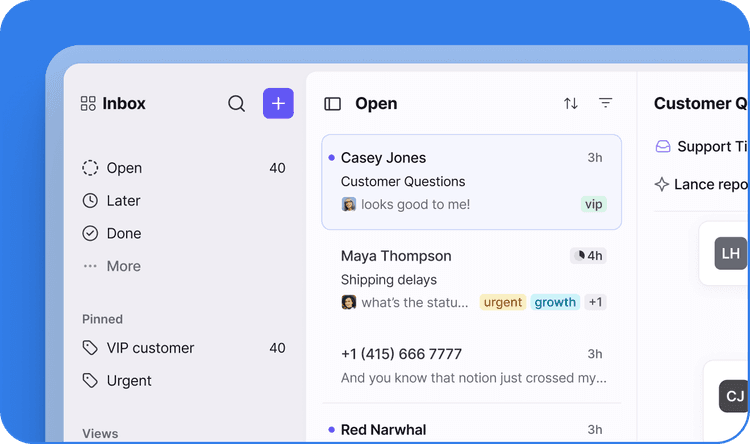
A common example of task automation is routing customer conversations. Tools send conversations to the right person through preset rules, eliminating the need to manually review and assign each ticket. The tools may also send out automated reminders so no one has to constantly check for upcoming deadlines or unattended tickets. The goal is to reduce administrative overhead and improve productivity by letting teams focus on high-impact work rather than ongoing triage.
For tasks that require a follow-up action, like a customer requesting a status update or a support case getting escalated, automation tools can assign the task to the right person or team with no manual intervention required.
Best practices for implementing task automation
If you’d like to integrate task automation software into your customer operations stack, here’s how to automate tasks effectively.
Choose the right task automation software
Research task automation solutions to find one that integrates with your existing tools and offers the features you need beyond the baseline triggers and actions. That might be built-in data privacy compliance, scalability for fast-growing organizations, or an intuitive user interface (for instance, drag-and-drop functionality).
Start small
To test the waters, choose a single repetitive task that takes up a lot of time or is especially prone to human error. You might begin by automating follow-up reminders or basic data entry. If it works and your team is comfortable using it, you can expand from there. If not, you gain valuable insights into what to avoid or realize that your chosen solution isn't the right fit.
Keep humans in the loop
Customer service task automation is best suited for tasks with clear, repeatable rules. Anything that requires making a judgment call is probably best left to human support reps — and even those routine tasks stand to benefit from a second look occasionally.
Reassess regularly
Every time you launch a new automation, track its impact using metrics like time saved, errors reduced, and productivity gained. The results can help you identify opportunities to refine your automations.
With the right approach, task automation reduces support reps’ work, keeping operational processes efficient and consistent.
Other resources
- Workflow automation
Learn what workflow automation is, how it works, and how B2B organizations use it to improve coordination, visibility, and operational efficiency.
- Customer service automation
See how customer service automation helps teams route work, reduce repetitive tasks, and keep ownership clear across customer conversations.
- Round robin assignment
Learn what a round robin assignment is, how it works, and the best practices B2B teams use to balance workloads, improve response times, and smooth customer operations.
- AI workflow automation
Learn what AI workflow automation is, how it works, and how B2B teams can use workflow automation tools to effectively improve their processes.
- Ticket triage
See how ticket triage helps support teams classify requests, prioritize urgent issues, assign ownership, and keep customer work moving with clear context.
- Customer support ticket
Learn what a customer support ticket is, how they work and the most common types, and why they matter for B2B teams when managing customer issues.
- Customer experience management
Learn what customer experience management is, and best practices for creating consistently high-quality experiences across customer lifecycle touchpoints.
- Operational customer relationship management
Learn what operational CRM is, how it differs from other CRM types, and how businesses use it to support day-to-day customer work.