

Related terms
Email ticketing system
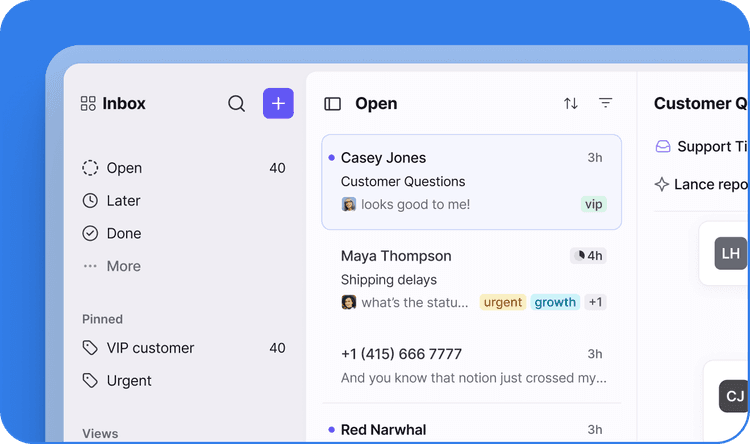
An email ticketing system organizes incoming emails into trackable tickets. Rather than managing requests across disconnected shared inboxes, teams can give each ticket a unique ID, status, priority, and an assigned owner. These tools can also automate routing, using predefined rules to send each ticket to the right person or team.
While shared inboxes have a similar purpose with email ticketing systems, they differ in structure. A shared inbox handles basic cross-team communication, but its ticketing systems handle the accountability and reporting behind the work. Seeing as customer operations today support growing customer-facing communication and internal coordination, a more comprehensive system is a necessity.
How does an email ticketing system work in B2B?
Most customer service email ticketing systems follow the same workflow: capture, assign, collaborate, and resolve. Here’s how each step works:
- Capture: A customer sends an email and the system creates a unique ticket with an associated number. During this stage, the system can be set to trigger an automatic reply to let the customer know someone is looking into their issue.
- Assign: The system reads the ticket and sends it to the right person or team using automatic rules. For high-touch tickets or complex issues requiring full customer history, manual assignment can also work.
- Collaborate: Customer support reps can work together directly within the ticket using private internal notes. When they need input from other departments, they can loop in the right teammates without exposing internal discussions to the customer. Throughout the process, the system keeps emails, notes, and relevant context together in one place.
- Resolve: The customer representative writes a final reply and sends it through the system. The customer gets an update and can reply back to keep talking. Once the problem is fixed and the customer is satisfied with the resolution, the ticket is closed.
Each step builds on the last, helping teams centralize communication and run faster operations even as complexity and support ticket volume increases.
Features B2B teams should look for in email ticketing systems
Email ticketing doesn’t stop at basic inbox organization. For teams that need structured yet flexible email ticket management systems, there are multiple platforms available online. But, how can you find the best fit?
Consider the four features below to get your research started:
- Team collaboration: Teammates should be able to leave internal notes, @mention colleagues or subject-matter experts directly, and work in shared drafts to edit responses and maintain a unified voice. Without built-in collaboration, teams risk duplicating work or leaving ownership unclear.
- SLA management and escalation: Service-level agreement (SLA) monitoring keeps everyone accountable from the first touch to the follow-up after resolution. Custom response and resolution times based on account value, plus automatic breach escalations, help set clear service quality standards for each customer.
- Automated triage and routing: When triage and routing are automated, you don’t have to worry about customer emails landing in the wrong inbox. Issues are sorted based on domain, contact tier, or urgency, allowing customer representatives to focus on complex issues that require closer attention.
- Collision detection: Collision detection prevents multiple account managers or support representatives from simultaneously replying to the same client email, which can create confusion for the customer and duplicate work for the team.
Other resources
- Customer messaging platform
Learn what a customer messaging platform is, how it works, and the core capabilities to look for to support visibility and cross-team collaboration.
- Contact management
Learn the definition of contact management, what software features to look for, and how it differs from a traditional CRM platform.
- Real-time messaging
See how real-time messaging works, how it differs from instant messaging, and why live chat features that maintain context are best for B2B communication.
- Outbound email
Outbound email isn’t just for cold outreach. Learn how B2B teams use it to proactively start purposeful conversations and keep them clear and actionable.
- Email cadence
Learn the meaning of email cadence, why it matters, and best practices that help B2B teams communicate consistently and nurture customer relationships.
- Help desk software
Explore help desk software features, benefits, and buying criteria for teams that need clearer support, defined ownership, and better visibility.
- Email etiquette
Learn the core rules of email etiquette, why they matter, and how they help teams keep customer conversations clear, consistent, and easy to act on.
- Automated response
Learn what automated responses are and how they work. Find out when B2B teams should rely on auto-responses and when human expertise should take the lead.