

Related terms
Email cadence
The meaning of email cadence is simple: It’s the frequency at which a company sends emails. While the term often appears in the context of sales outreach, B2B organizations use defined email cadences across onboarding, customer success, renewal, and ongoing account management.
A common example of an email cadence is a sales team laying out a lead nurture sequence. The first email might be a personalized introduction, followed by a series of follow-up emails spaced over several days or weeks to keep the prospect engaged without overwhelming them. An onboarding email cadence might open with a friendly welcome email, followed by periodic check-ins tied to key setup milestones. Customer success and renewal teams rely on similar well-timed communication sequences to maintain momentum and strengthen the customer relationship.
Why email cadence matters in B2B
For email campaigns, the right (or wrong) email cadence can be the difference between customers who engage and those who unsubscribe.
Thoughtfully planned email cadences create consistent, timely communication throughout the customer lifecycle. Without a set cadence, outreach depends on individual habits instead of systems, making it easy for communication to become sporadic or fade completely.
That improvisation also extends to internal coordination. When team members or departments follow a preset email cadence, whoever picks up the thread has a clear sense of when to reach out. For example, if support hands an issue to customer success, the success manager knows the next touchpoint is due in two days. Without one, each person in the chain is left to interpret timing on their own, creating gaps or overlaps in communication.
Sticking to defined email cadences also helps B2B teams nurture long-term relationships. Staying in touch — not too often, but not too infrequently — keeps customers engaged between major milestones, such as a renewal or an upgrade. It signals that customers are a priority, not just a revenue source.
B2B best practices for building an effective email cadence
A few simple best practices can help you define email cadences that stay relevant and well-timed throughout the customer journey:
- Adapt to the customer: Not every customer prefers the same messaging frequency. Personalizing cadence to match each recipient’s needs keeps communication timely and relevant across segments.
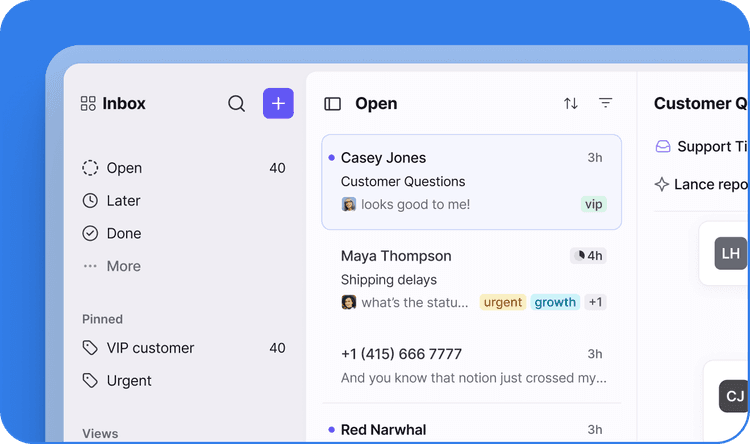
- Maintain shared visibility: Cadence of communication defines the timing, but successful handoffs also depend on shared context. Use software that centralizes customer details so every team member sees the same information when a conversation changes hands.
- Use automation: Automated emails triggered by specific behaviors save time and effort by cutting down on manual work. This works well for routine messages that align neatly with prewritten email templates, such as welcome emails and onboarding reminders. High-stakes interactions — like escalations or contract renegotiations — are best left to human agents, especially when a breach of etiquette could cost you the account.
- Review and refine: As customers and their circumstances change, your customer communication strategy should change with them. Regularly review key engagement metrics, customer feedback, and business outcome data to ensure the communication cadence stays aligned with what customers expect. If it starts to drift, it’s time to recalibrate.
Other resources
- Cold email
Understand what cold emails are, why they’re valuable for B2B outreach and lead generation, and the best practices that help teams write them effectively.
- Email etiquette
Learn the core rules of email etiquette, why they matter, and how they help teams keep customer conversations clear, consistent, and easy to act on.
- Outbound email
Outbound email isn’t just for cold outreach. Learn how B2B teams use it to proactively start purposeful conversations and keep them clear and actionable.
- Customer loyalty
Learn what customer loyalty is, why it matters, and the operational strategies that help B2B teams improve long-term customer relationships.
- Customer support
Learn what customer support is, why it matters, and the best practices B2B teams use to deliver consistent service and resolve customer issues.
- Customer experience management
Learn what customer experience management is, and best practices for creating consistently high-quality experiences across customer lifecycle touchpoints.
- Email ticketing system
Learn what an email ticketing system is, how it works, and the features organizations should look for to manage customer communication more efficiently.
- Customer journey map
Learn what a customer journey map is and the stages it includes. Create your own to uncover pain points and improve customer experience.