

Related terms
Inbox zero
Inbox zero, or “inbox 0,” has become shorthand for keeping communication channels clear so teams can respond and resolve issues right away without digging through cluttered inboxes. It’s a common personal productivity hack, but in B2B contexts, it creates a shared operational rhythm that keeps customer-facing conversations moving and prevents work from piling up.
What is inbox zero?
In fast-paced, collaborative environments, inbox zero is a team-level or organization-wide practice of keeping shared and individual mailboxes free of unread, unprocessed messages. While the idea started with email, inbox zero applies to all types of communications in omnichannel support environments, from customer inquiries to internal DMs.
The goal is to create a culture of discipline, where conversations — especially customer-facing ones — keep moving forward rather than getting stuck in an unattended inbox.
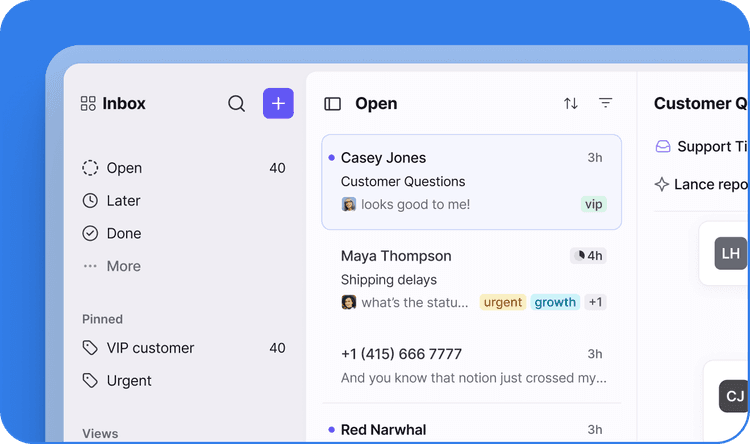
Teams that adopt the inbox zero method treat inboxes as workflow intake points: Every message is acknowledged, then routed or resolved. This keeps service response times down, ownership clear, and prevents customer requests from getting buried in clutter.
How to achieve inbox zero across team workflows
Reaching inbox zero at scale requires careful coordination. Everyone needs to know what’s expected of them and what they can expect from team members.
Successful teams keep communication channels clear through:
- Centralized routing rules: Define exactly how incoming messages must be assigned so teams never have to rely on manual sorting or guesswork.
- Clear ownership handoffs: Make sure every message has a responsible owner, particularly when work moves between functions, like sales, onboarding, or support.
- Consistent processing intervals: Set times when teams collectively clear queues back to zero to avoid backlog buildup.
- Shared context capture: Log decisions, updates, and next steps in a shared system visible to all customer-facing teams.
- Automated categorization: Use structured workflows to tag or prioritize messages so teams know which conversations to focus on first.
Operational practices for staying at inbox zero as a team
Maintaining inbox zero over time depends on creating realistic, scalable team habits. Individual discipline matters, but long-term success requires shared systems and structured processes, especially when teams manage multiple mailboxes at once.
Here are four practices that make an inbox-zero method sustainable:
- Establish a shared definition of “done”: Align on what it means to fully process a message so teams know exactly when an issue is fully resolved.
- Maintain cross-team visibility: Make inbox status, task ownership, and backlog trends visible so teams can rebalance work before queues start to grow.
- Create structured escalation paths: Define when and how messages move from one team to another to avoid delays due to unclear next steps.
- Conduct routine operational reviews: Evaluate patterns in volumes, response times, and bottlenecks, then adjust workflows accordingly.
With this framework, inbox zero becomes an operational standard for B2B teams, rather than an occasional cleanup effort.
Other resources
- Email inbox management
Explore email inbox management and how customer-facing teams use techniques like standardized triage and clear ownership to keep conversations moving.
- Conversation inbox
Learn what a conversation inbox is, how it works, and how B2B teams use it to coordinate customer communication and maintain shared context.
- Team inbox
Learn how a team inbox keeps customer conversations moving with shared visibility, clear ownership, and reliable follow-through.
- Cold email
Understand what cold emails are, why they’re valuable for B2B outreach and lead generation, and the best practices that help teams write them effectively.
- AI triage
Learn how AI triage helps B2B customer service teams assess customer queries, set priorities, and route work to the right team or next action.
- Canned response
Learn what a canned response is, when to use one, and how they help support reply faster without sacrificing customer context.
- Point of contact
Understand what a point of contact is, why it matters in B2B, and how clear ownership helps teams manage customer inquiries and follow-ups.
- Omnichannel customer service
Learn what omnichannel customer service means and how connecting context, ownership, and handoffs between channels helps teams deliver consistent support.