


Master B2B omnichannel analytics: gain visibility across teams, tools, and conversations to reduce friction and scale operations effectively.
Customer work in B2B rarely stays in one place. A request might start in email, shift to Slack, turn into a call, and end up buried in a CRM note. It passes through multiple teams and tools — and that’s where things get messy.
Most analytics tools track activity by channel, so you see response times or ticket counts — but not where work slows, why a handoff stalls, or where communication breaks down. The impact is real: the typical B2B company spends nearly three hours coordinating for every hour spent solving customer problems. This isn’t a lack of effort, but a byproduct of growth. As B2B organizations scale, more people, tools, and processes get involved, and visibility suffers.
Omnichannel analytics restores that visibility by tracing how customer conversations move across systems and workflows. With a full view of each customer request, B2B teams can measure end-to-end performance and deliver a better customer experience from first touch to final resolution.
What omnichannel analytics means for B2B
Omnichannel analytics is an integral part of B2B customer engagement. Instead of treating email, chat, and CRM activity as separate streams, omnichannel reporting tracks each request as it moves through different teams and systems. You see the full lifecycle of a conversation rather than isolated interactions.
That’s what sets it apart from multichannel analytics, which looks at performance within each channel independently. An omnichannel approach gives teams a complete view of the customer journey across every touchpoint. With omnichannel data, you gain awareness of how requests move, where they slow, and where service-level agreement (SLA) risk starts to build.
And the need for this insight is rising. As software ecosystems expand, tool-switching has grown from 24% to 39%, making it harder for B2B teams to stay aligned without a unified view.
Where ticket-first analytics tools focus on managing queues, omnichannel analytics goes further by mapping how requests progress from one handoff to the next. It connects the entire journey and surfaces operational insight you can’t get from channel-level metrics.
Why omnichannel analytics matters in B2B
Customer requests constantly shift across multiple channels and teams before they’re resolved. Omnichannel analytics gives teams a clear view of this movement, making it easier to spot bottlenecks, maintain SLA compliance, and respond efficiently, even as complexity and volume rise.
Here are the areas where omnichannel analytics adds the most value in B2B.
Visibility across channels
Omnichannel marketing analytics show where customers get stuck while purchasing or engaging with your brand. This clarity helps leaders prioritize fixes or adjust workflows, so requests move smoothly between teams. That’s how visibility drives better operational decisions — by pinpointing exactly where improvements will have the most impact.
Ownership and accountability
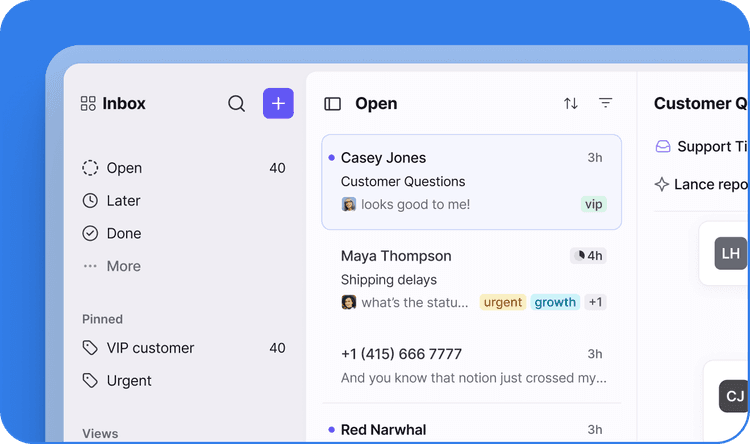
Bring clarity to accountability. Omnichannel analytics shows who owns each request, how long it takes to resolve, and whether SLA commitments are met. This information helps managers evaluate response quality and completion rates to identify gaps in ownership or training. Front’s Support Report surfaces these insights in one place, making it easier to monitor performance and route work to the appropriate owner.
Operational resilience even under peak times
Omnichannel analytics solutions show where operations strain under high demand. They highlight recurring customer issues, escalation trends, and response patterns that impact performance. With this omnichannel insight, teams can adjust staffing and refine workflows to stay consistent during volume spikes. An understanding of how processes hold up under pressure allows leaders to proactively prevent backlogs and keep service levels stable.
See how Ridepanda kept their customer communications human with Front, handling 4x higher volume while achieving high CSAT scores.
Insight into customer experience weak points
Not every breakdown announces itself. Accounts quietly churn. Customers stop responding. And somewhere in the thread, a handoff lost the context that would’ve saved it.
Omnichannel analytics makes those failure points visible before they compound. You can see where response times spike by channel, which handoffs consistently lose context, and where requests stall between teams — like when a billing dispute routes through support but needs sign-off from finance and account management. Patterns like these rarely show up on dashboards. They only become visible when you’re tracking the full thread, not just the last reply.
That visibility is what separates proactive operations from reactive ones. When leaders can see where the customer experience degrades — not just that it did — they can fix the right thing.
Key capabilities of omnichannel analytics platforms
An effective omnichannel analytics platform gives you control across every workflow and handoff. In complex B2B environments, it shows the entire path of customer requests and flags risks early enough for teams to intervene.
Here are the capabilities to look for when evaluating different platforms.
Unified reporting
Unified reporting brings data from email, chat, social media, and CRM into a single view of customer interactions. Rather than juggling disconnected sources or reconciling scattered reports, leaders can track how requests move through multiple channels and make decisions with full context for every conversation.
Conversation-level analytics
Ticket counts alone miss the nuances of the customer experience. Conversation-level analytics follow requests as they move between teams and tools, revealing where friction occurs and who owns each step.
This clarity is even more critical with AI in the mix. Recent data shows that 71% of companies using AI experienced coordination failures in the past three months, with 24% saying that AI created extra work. Another 22% lost context during handoffs, and 20% failed to route requests correctly.
With proper omnichannel analytics, teams can detect escalation patterns before they become systemic and ensure AI enhances — not disrupts — customer support workflows.
SLA tracking
Monitoring SLAs across teams and touchpoints keeps requests moving, regardless of which channel the request came through. Leaders gain a clear view of bottlenecks, enabling them to enforce accountability and take corrective action before delays affect customer relationships or revenue.
See how TEquipment went from responding to customers in 8 hours to just 15 minutes with Front.
Role-based dashboards
Different teams have different North Star metrics. Quarters end, goals shift, and leadership expectations change. Custom dashboards provide real-time visibility and deliver the right metrics for each role, giving teams the exact data they need to act quickly and stay aligned without wading through irrelevant information.
Trend detection
Trend detection uncovers recurring issues and process gaps that can trigger escalations or slow resolution. With these insights, B2B managers can adjust staffing and workflows to improve customer service quality and stay ahead of complaints.
Omnichannel analytics platform types
When evaluating omnichannel analytics, it helps to understand the types of software that make these insights possible. Here are four common customer data platforms:
Customer operations platforms: Centralize customer workflows, handoffs, and multichannel data so teams can track requests and preserve continuity.
Customer support or help desk solutions: Manage and resolve tickets automatically while providing insight into response times and escalations.
Data integration/BI tools: Consolidate data from disparate systems to uncover trends, measure performance, and inform operational decisions.
Omnichannel reporting modules: Layer reporting across channels to show the full lifecycle of customer conversations and gauge workflow efficiency.
How Front powers omnichannel analytics for B2B teams
In B2B organizations, coordination isn’t just a function — it’s the work itself. Customer requests bounce between email, chat, and internal tools before getting resolved, making visibility critical to success. Omnichannel analytics tracks conversations end-to-end to show exactly where communication breaks down.
Front gives leaders that clarity by mapping every touchpoint in the customer journey. Handoffs, roadblocks, and SLA risks become immediately visible, allowing you to take proactive action instead of reactive firefighting. Even under heavy volume, Front keeps teams aligned by maintaining clear ownership and ensuring requests move in the right direction — all without switching dashboards or chasing fragmented data.
The results are tangible: faster resolution times, stronger accountability, and smoother cross-department collaboration. With greater insight and coordinated workflows, B2B leaders can scale confidently and resolve requests with ease.
Explore how Front gives your team full visibility into conversation flow and optimizes operations on every channel.
FAQ
What challenges do companies face when implementing omnichannel analytics?
Many companies struggle with fragmented systems, inconsistent data, and unclear ownership across teams, which makes it hard to get a complete view of customer conversations. They also face resistance to new workflows, requiring careful change management to make sure teams adopt omnichannel analytics effectively.
How often should B2B teams review omnichannel analytics?
B2B teams should review analytics regularly, ideally weekly or biweekly, to catch SLA risks and recurring issues before they escalate. Frequent reviews help managers fine-tune staffing, workflows, and priorities in real time to keep operational performance strong.